
Wayang: The Art of Storytelling Through Shadows
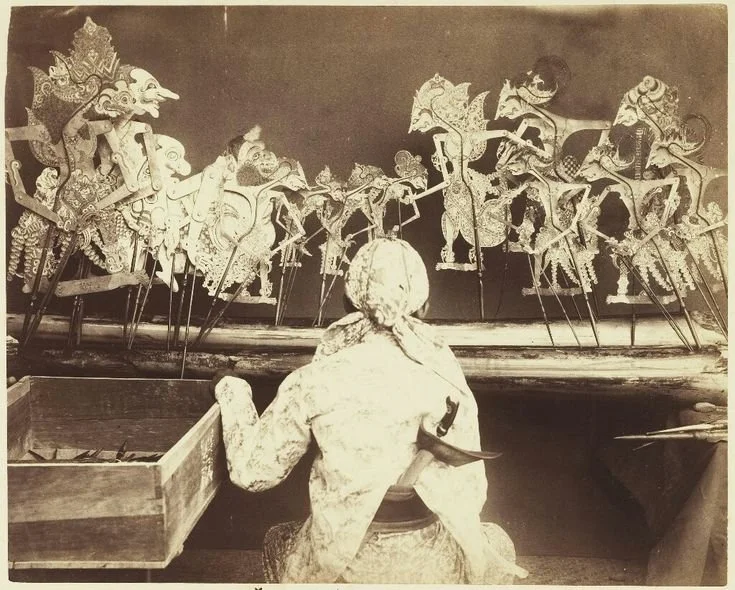
Wayang, one of Indonesia's oldest and most celebrated storytelling traditions. For generations, Wayang has been more than entertainment. It has served as a way to share knowledge, explore moral questions, preserve cultural memory, and bring communities together. In Yogyakarta, where Javanese traditions remain an important part of cultural life, Wayang offers a fascinating window into the region's history and philosophy. But where did this tradition begin, and how did the shadows become such a meaningful part of people's lives?
The word wayang is closely associated with the Javanese word for shadow, reflecting the silhouettes that appear during traditional shadow-puppet performances. Its history stretches back more than a thousand years, although its precise beginnings remain a subject of scholarly discussion.
One of the earliest written references appears in the Wukajana Inscription, dated 907 CE, which mentions a Wayang performance associated with ancestral or spiritual observances. By the eleventh century, the Old Javanese literary work Arjunawiwaha was already describing audiences who became emotionally immersed in performances featuring carved leather puppets.
These records reveal that Wayang was an established art long before the emergence of the modern Indonesian nation.Its development was shaped by centuries of cultural exchange. As Hindu and Buddhist traditions spread through Java, stories from the Indian epics Mahabharata and Ramayana became important sources of inspiration.
Yet these stories were not simply reproduced.
Javanese storytellers adapted their characters, plots, and philosophical ideas, creating distinctive interpretations rooted in local beliefs and cultural experiences. Later, as Islam became increasingly influential in Java, Wayang continued to evolve. Javanese traditions associate figures such as Sunan Kalijaga, one of the revered Wali Songo, with using Wayang to communicate religious teachings. Although particular accounts of his role belong partly to religious and cultural tradition rather than independently established history, they reflect how Wayang came to be understood as a bridge between different beliefs.
Rather than remaining unchanged, Wayang absorbed new influences while preserving older elements. This ability to adapt is one of the reasons the tradition has endured.
Although Wayang is often associated with leather shadow puppets, the tradition encompasses several forms of storytelling and performance.
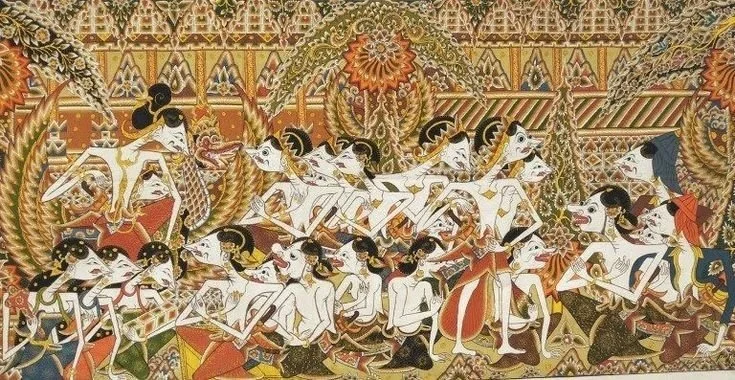
Wayang Kulit — The Art of Shadows
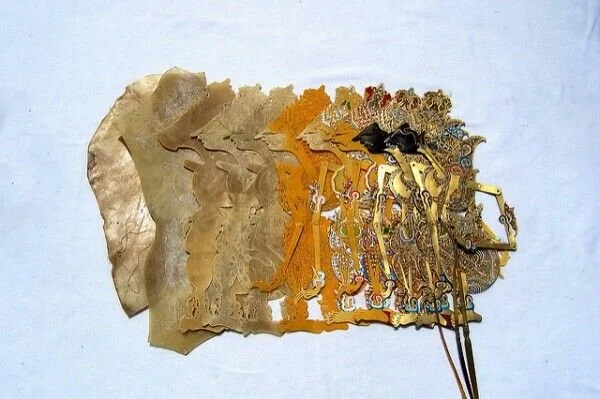
Perhaps the most recognisable form, Wayang Kulit uses intricately carved leather puppets, traditionally made from buffalo hide. A light positioned behind a screen creates silhouettes that move as the storyteller manipulates the puppets. Its stories often explore the Mahabharata, Ramayana, and Javanese interpretations of moral and spiritual life.
Wayang Golek — Stories Carved in Wood
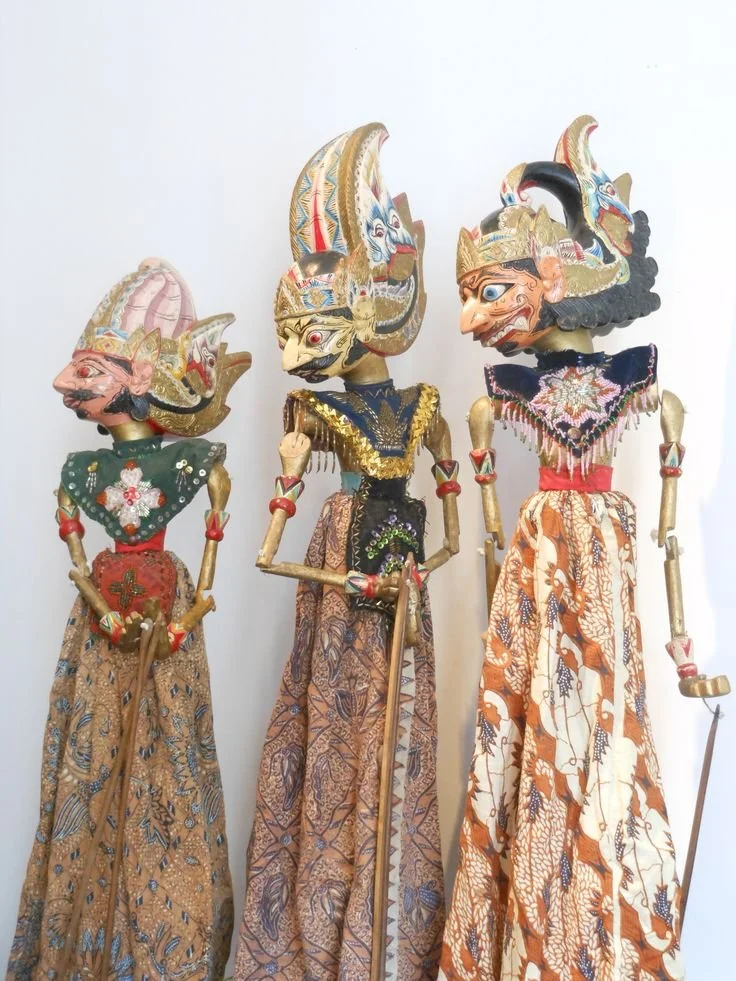
Popular particularly in Sundanese communities of West Java, Wayang Golek replaces flat leather puppets with three-dimensional wooden figures. Their colourful costumes, expressive faces, and movements bring stories to life in a distinctive way.
Wayang Wong — When Humans Become the Characters
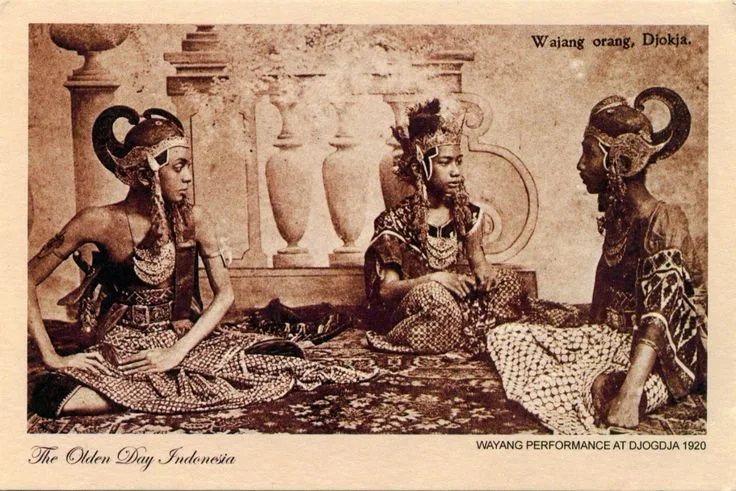
Also called Wayang Orang, this form brings Wayang stories to the stage through human performers. Actors use dance, dialogue, elaborate costumes, and stylised movements to portray characters traditionally represented by puppets. It has played an important role in the performing arts of Java, including Yogyakarta's royal court.
Wayang Beber — Stories Unfolding on Scrolls
Rather than puppets, Wayang Beber uses illustrated scrolls. As each section is unrolled, the storyteller narrates the scenes depicted in the paintings.This relatively rare tradition offers a glimpse into another form of Indonesian visual storytelling. Despite their differences, these traditions share something fundamental: stories become a way to communicate ideas across generations.
At the heart of a Wayang performance stands the dalang, the puppeteer and storyteller. But calling the dalang simply a puppeteer hardly captures the complexity of the role. During a Wayang Kulit performance, the dalang controls the movement of numerous characters, performs their voices, narrates the story, and coordinates with the musicians.
A single storyteller may move effortlessly between a noble warrior, an arrogant king, a mischievous servant, and a terrifying giant. Each character has a distinctive personality, voice, and manner of speaking.
Accompanying the performance is a gamelan ensemble, whose instruments create an atmosphere that changes with the story. Gentle melodies may accompany a quiet conversation, while faster, more dramatic rhythms heighten the tension of a battle. Vocalists, including pesinden (Javanese Traditional singer), add another layer to the musical experience. Traditionally, a Wayang Kulit performance may last through the night. It demands remarkable skill, endurance, and knowledge from everyone involved.
The dalang is also more than a performer. Through dialogue, humour, symbolism, and interpretation, the dalang can connect familiar stories with questions facing the audience today. In this sense, Wayang is not simply the retelling of an old story. It is an ongoing conversation between the storyteller and society.
One of Wayang's most fascinating qualities is the complexity of its characters. They are not always divided neatly into good and evil. Many possess admirable qualities alongside human weaknesses, making their struggles surprisingly relatable.
Arjuna is one of the Pandawa brothers from the Mahabharata, is frequently associated with refinement, discipline, and skill. Yet his stories also explore responsibility, desire, and difficult choices.
Bima, another Pandawa warrior, is known for his strength, courage, and straightforward nature. His character represents a different ideal of heroism.
Rama and Sita, central figures in the Ramayana, appear in stories concerning love, loyalty, duty, and the challenges of human relationships.
Then there are the Punakawan: Semar, Gareng, Petruk, and Bagong. These distinctly Javanese characters bring humour and everyday concerns into the grand world of heroes and kings. Semar, in particular, occupies an extraordinary position. Despite appearing as a humble servant, he is often portrayed as possessing profound wisdom and the courage to question those in power.
Through characters like Semar, Wayang explores an important idea: wisdom and moral authority are not necessarily determined by someone's social position. Even the greatest heroes have something to learn. To someone unfamiliar with Wayang, its unusual figures and elaborate scenes might appear purely decorative. Yet many elements carry meanings that go beyond their appearance. Consider the gunungan, also known as the kayon.
Shaped like a mountain or a tree, this distinctive puppet often appears at the beginning and end of a performance, as well as during transitions between scenes. It can symbolise the natural world, the cosmic order, and the relationship between different forms of existence. Within a performance, it may also represent a forest, a mountain, fire, or another element of the story. Its changing role demonstrates how a single image can carry several layers of meaning. The characters themselves are also presented through an established visual language. Their facial expressions, posture, clothing, and ornaments help communicate their identities and qualities.
Wayang rarely needs to present these questions as straightforward lectures. Instead, it places them within the lives of its characters, allowing audiences to reflect on the choices being made. This is one reason Wayang has remained meaningful across different periods of history. The circumstances may change, but many of the questions remain familiar.
Yogyakarta holds a particularly important place in the development and preservation of Javanese Wayang. For centuries, royal courts have contributed to the refinement of performance traditions, artistic styles, literature, music, and ceremonial practices. The Yogyakarta Sultanate developed its own distinctive Wayang Kulit tradition, known as Gagrag Ngayogyakarta.
Its puppets can be recognised through particular shapes, carving patterns known as tatahan, and painting techniques called sunggingan. These details are not merely decorative. They belong to a wider artistic tradition passed down through generations of craftspeople and performers. Within the Yogyakarta Palace, Wayang has also served as a medium for exploring ethical, philosophical, and spiritual ideas. The palace continues to preserve historical puppets and support traditional performances.
But Wayang's relationship with Yogyakarta extends well beyond the royal court. Performances have also been part of community celebrations, cultural gatherings, and local traditions. In some settings, Wayang accompanies important ceremonies; in others, it offers an evening of storytelling, music, and shared entertainment. For those who grew up around it, the sound of gamelan or the familiar voices of Wayang characters may carry memories of family gatherings and neighbourhood events.
And for younger generations encountering it for the first time, Wayang can become a new way of discovering the cultural traditions of their home. Its meaning is not identical for everyone. That diversity is part of what makes Wayang a living cultural tradition rather than simply a historical artefact.
In 2003, UNESCO proclaimed Indonesian Wayang puppet theatre a Masterpiece of the Oral and Intangible Heritage of Humanity. In 2008, it was incorporated into UNESCO's Representative List of the Intangible Cultural Heritage of Humanity. This international recognition acknowledges its artistic, historical, and cultural significance.
Wayang survives through the people who continue to practise it: dalang, puppet makers, musicians, teachers, and communities who value the stories being told. Today, performances may take place in traditional village settings, royal courts, cultural institutions, and contemporary stages. Some still last through the night, while others have been adapted into shorter presentations for new audiences.
In Yogyakarta, institutions such as Museum Sonobudoyo provide opportunities for visitors and residents to encounter Wayang performances, while cultural organisations and artists continue to study and develop the tradition. Its stories also remain open to contemporary interpretation. A dalang might use familiar characters to comment on modern leadership, changing social values, or issues affecting everyday life. In this way, Wayang continues to do what it has done for centuries: help people explore their world through storytelling.
Perhaps the most remarkable thing about Wayang is not its age, its intricate craftsmanship, or even the extraordinary skill required to perform it. It is the way these elements come together to tell stories about being human. Behind the shadows are generations of people who have shaped, preserved, and reinterpreted these stories. Wayang reminds us that culture is not simply something inherited from the past. It is something people continue to create, share, and give meaning to.