

Tracing the Historical Roots of Yogyakarta’s Sweet Legacy
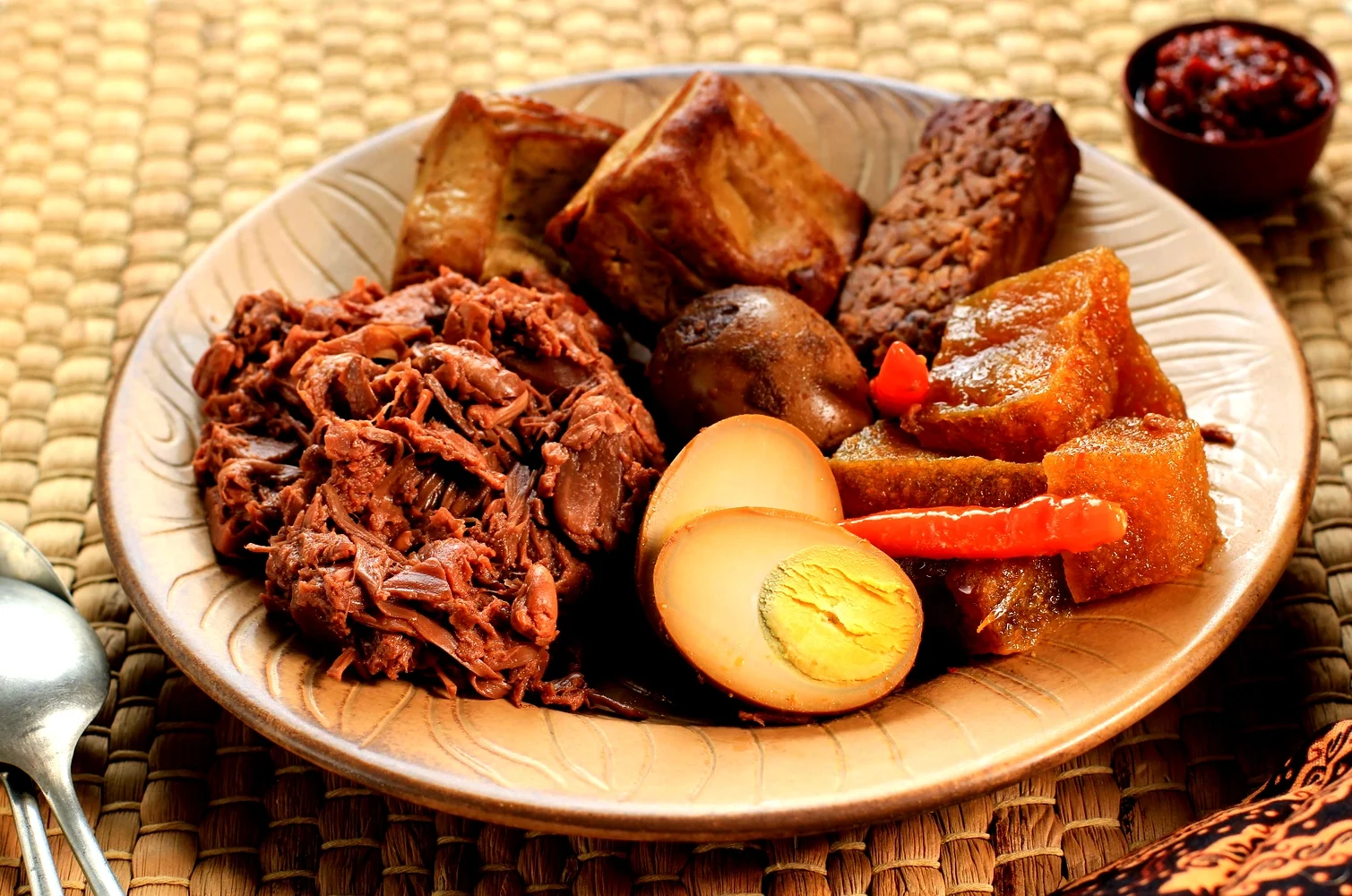
Gudeg is one of the most well known dishes from Yogyakarta, it is usually made with gori (young jackfruit) as the main ingredients to cook gudeg. Gudeg is typically cooked with spices like garlic, shallots, galangal, coriander, other ingredients like coconut milk and generous amount of palm sugar, then served with rice with eggs, chicken or tofu, alongside sambel krecek (a traditional Javanese spicy stew made from krecek or dried cattle skin crackers/rambak, simmered in a coconut milk gravy with chili peppers) and sprinkled with areh (savory coconut milk).
Gudeg is said to have originated in the 1500s, like the legend said the Mataram Kingdom, founded in 1500s was situated in an area abundant with jackfruit trees. Fearing that they’ll run out of food for survival, people around the kingdom had no other staple but to prepare dishes using young jackfruit as primary ingredients. By the 1700s, gudeg had gained popularity alongside the establishment of the Yogyakarta Sultanate in 1755. In the late 20th century, particularly during the 1980s tourism exploded, and gudeg became increasingly commercialized and widely recognized as the city’s culinary icon. Over time, gudeg has evolved from being sold at street food stalls to becoming a special menu item. In the early days, gudeg was served and sold using besek, a food container made from bamboo with banana leaf, but these days gudeg can be sold in cans.
There are two variations of gudeg, one gudeg basah (wet gudeg) which is served with areh (coconut milk broth) so it has moist texture, the other one is gudeg kering (dried gudeg), which is dried through a saute process resulting in reddish-brown color. Before the canned gudeg existed, it’s typically packed in clay pots called kendil and can still be enjoyed the next day but it has a short shelf life. The pioneers of gudeg vending originated from the mbarek area near bulaksumur. In the 1970s the dish spread to the wijilan area which is close to the keraton Kasultanan Yogyakarta. As gudeg gained a lot of popularity among locals to international tourists, gudeg got more versions and changed to fit the local taste, it is believed that the savory version of gudeg is influenced by Semarang’s coastal proximity.
The history of gudeg within the Yogyakarta Palace has a deep root. The dish is a traditional food that has been an integral part of the culinary culture in the palace for centuries. Gudeg is closely tied to royal traditions and religious ceremonies in Yogyakarta Palace. It is mostly served during special occasions like royal weddings and religious festivals. Throughout its history, gudeg has always been prepared with great care and considered a special dish. The cooking process involves using high-quality ingredients and intricate techniques. In the palace, gudeg evolved according to the palace’s taste. Some types of gudeg in the palace incorporate luxurious ingredients such as wagyu beef or free range chicken and some exclusive spices and seasonings are used to enhance the flavor of gudeg.
With its unique story, gudeg itself also has a philosophy behind it. Gudeg is typically cooked slowly which could be quite an exercise for your profound patience, this dish cannot be rushed. If you try to do it quickly you’ll end up with a pale and flavorless gudeg that would not be desirable. This process could be called “Sabar” or a word in both Indonesian & Javanese for patience. This philosophy is embedded in every stage of the preparation, turning every step of cooking gudeg as a meditative ritual. A true gudeg from Yogya is typically deep and rich in color from its cooking process, it is usually a deep, burnished red-brown color, it is traditionally achieved from lining leaves of teak tree in the clay pot used to slow cook gudeg. While the jackfruit simmers, tannins from the leaves bleed into the fruit staining it with the hue of mahogany. This way of cooking is a direct culinary link to the Ancient Mataram Kingdom ancestors that used to use resources of the land with ingenious efficiency. Gudeg is more than a dish, it is a quiet reminder that the Javanese way of life is not rushed, not loud, but deeply rooted, simmered slowly, just like the pot that has been cooking for centuries.