

The Rise of Islam in Java
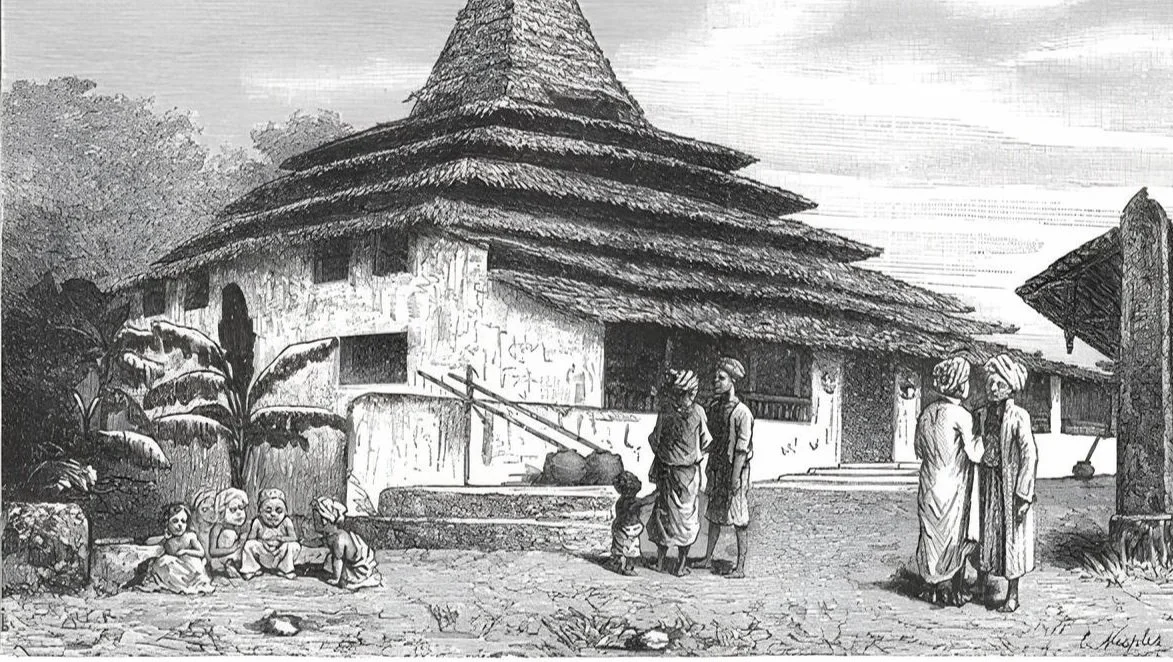
Java is home to the largest Muslim population in the world. More than 100 million people on the island identify as Muslim, making Islam deeply intertwined with everyday life from traditions and festivals to philosophy and art. But Islam did not arrive in Java through conquest or force.
Instead, its story is one of trade, cultural exchange, and gradual transformation. Over centuries, Islamic teachings blended with existing Javanese traditions, creating a unique religious and cultural landscape that still defines Java today.
Long before Islamic kingdoms emerged in Java, the island was already connected to a vast maritime trading network.
Between the 13th and 15th centuries, Java became a crucial hub linking traders from Arabia, Persia, India (especially Gujarat), and China.Merchants traveled across the Indian Ocean exchanging spices, herbs, textiles, porcelain, and precious metals. With trade came new ideas including beliefs and religion.Muslim traders who arrived in Java did not come as conquerors. Instead, they settled along the northern coast, married local communities, and slowly formed small Muslim societies.
These coastal areas, known as Pesisir, soon grew into thriving multicultural port cities such as: Gresik, Tuban, Jepara, Cirebon, Banten. Over time, these cities became centers of Islamic knowledge and influence. At the same time Islam was spreading through trade, the powerful Majapahit Empire, the last great Hindu-Buddhist kingdom in Java—began to weaken. Internal conflicts and a major civil war in the early 15th century weakened its authority over distant regions.
As the empire declined, coastal merchants and local rulers gained more power. Many of these elites were part of multicultural trading communities with connections to the Islamic world. With wealth from trade and growing political influence, they began establishing new Muslim-led political centers. This shift eventually led to the rise of the first Islamic kingdom in Java: the Demak Sultanate in the late 15th century.
The Wali Songo: The Nine Saints Who Spread Islam
One of the most important figures in the story of Islam in Java is the legendary group known as the Wali Songo, or the Nine Saints. “Wali” means trusted one or friend of God, while “Songo” means nine in Javanese. These nine scholars and missionaries played a crucial role in spreading Islam across Java during the 15th and 16th centuries.
Rather than replacing Javanese culture, they embraced it. The Wali Songo used local traditions, art forms, and philosophy to communicate Islamic teachings in ways that were familiar and accessible to the people.
The nine saints are traditionally known as:
Sunan Gresik
Sunan Ampel
Sunan Bonang
Sunan Drajat
Sunan Giri
Sunan Kalijaga
Sunan Kudus
Sunan Muria
Sunan Gunung Jati
Each of them contributed in different ways, through education, social welfare, cultural creativity, and political leadership. Culture as a Bridge for Religion what made the Wali Songo successful was their cultural approach to teaching Islam. Instead of rejecting existing traditions and trying to erase them, they adapted them. One of the most famous examples is wayang kulit, the traditional Javanese shadow puppet theatre.
Sunan Kalijaga modified these performances by incorporating Islamic values into stories originally based on the Hindu epics Mahabharata and Ramayana. Characters and symbols were reinterpreted to reflect Islamic teachings while keeping the storytelling style familiar. Music also played an important role.
Sunan Bonang developed new gamelan compositions designed to inspire reflection and spiritual devotion. Some traditions that continue today, such as the Sekaten festival, are believed to originate from these early efforts to introduce Islamic ideas through music and celebration.
Even philosophical concepts were adapted. Javanese ideas about the origin and purpose of life were reinterpreted through Sufi Islamic thought, allowing people to connect spiritual teachings with their existing worldview.
The growing influence of Islam eventually led to the formation of the Demak Sultanate, widely considered the first Islamic state in Java. Founded in the late 15th century by Raden Patah, Demak emerged from a coastal trading community that had once been under Majapahit rule. With the support of the Wali Songo, Demak quickly grew into a powerful maritime kingdom. Its strategic location allowed it to control important trade routes along the northern coast of Java, helping Islam spread rapidly to other ports such as Gresik, Tuban, Jepara. The Great Mosque of Demak, still standing today, remains a powerful symbol of this early Islamic era. Although the kingdom eventually declined due to internal conflict, Demak laid the foundation for future Islamic states across Java.
Following Demak’s decline, political power shifted inland to the Mataram Sultanate, which dominated Java during the 17th century. Under the rule of Sultan Agung (1613–1645), Mataram reached its peak. Sultan Agung was both a powerful ruler and a visionary cultural leader. He expanded Mataram’s territory across most of Java and challenged the Dutch East India Company in Batavia. But his greatest legacy may be his ability to blend Islamic principles with Javanese royal culture. In 1633, he created the Javanese-Islamic calendar, combining the Islamic lunar calendar with the traditional Javanese system. He also promoted literature, philosophy, and art that merged Islamic mysticism with Javanese spirituality. Through this cultural synthesis, Islam became deeply embedded in the identity of the Javanese kingdom.
The story of Islam in Java is not simply the story of a religion arriving on a new island. It is a story of adaptation, dialogue, and cultural creativity. From coastal traders and traveling scholars to saints, kings, and artists, many different forces shaped the island’s spiritual landscape. The result is a distinctive form of Islam often described as Javanese Islam or Kejawen, where Islamic beliefs coexist with local traditions such as:
selametan communal meals
nyadran grave visitation rituals
traditional arts like wayang and gamelan
This centuries-long blending of cultures created a rich and unique civilization, one where religion and tradition continue to shape daily life in Java today.