

The Philosophy of Tumpeng: Meaning, Symbolism, and Javanese Wisdom Behind Indonesia’s Iconic Celebration Dish
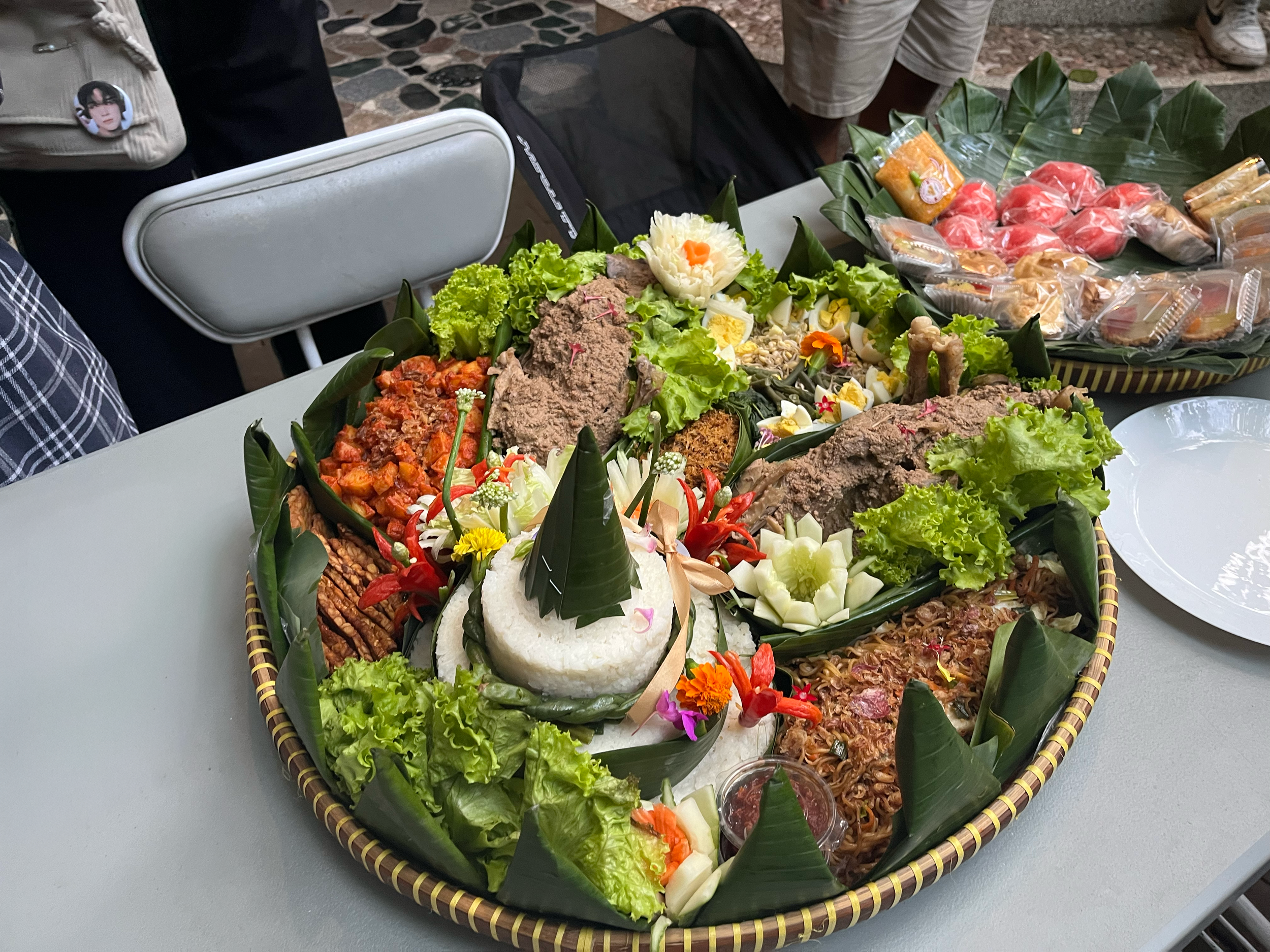
Ever wondered why many Javanese families choose Tumpeng instead of cake to celebrate birthdays, milestones, or sacred rituals?
More than just food, Tumpeng is a living symbol of gratitude, unity, spirituality, and cultural identity. Its presence at ceremonies reflects centuries-old Javanese philosophy that blends Hindu, Buddhist, and Islamic influences into one powerful cultural expression.
What Is Tumpeng and Why Is It Special?
Tumpeng is a cone-shaped mound of rice usually white, yellow, or uduk surrounded by side dishes from both flora and fauna. This visual composition isn’t random. It represents a miniature cosmos, a symbolic mountain inspired by Gunung Meru, a sacred axis in Hindu-Javanese cosmology.
As noted in Decoding the Meaning of Tumpeng, Tumpeng visually embodies the Javanese worldview:
Unity and togetherness
Gratitude to God and ancestors
Harmony with nature
Social balance and communal identity
Because Tumpeng is often prepared collectively, the process itself teaches gotong royong that means mutual cooperation and strengthens social bonds across generations.
The Meaning of Tumpeng in Javanese Philosophy
Historically, Tumpeng existed long before Islam arrived in Java. Over time, it was absorbed into Javanese spiritual life and reinterpreted with local philosophies.
Two common interpretations of the word tumpeng are:
“Tumapaking panguripan, tumindak lempeng tumuju Pangeran”
Which means live righteously and in God’s way.“Yen metu kudu sing mempeng”
when you begin something, do it earnestly and wholeheartedly.
Both meanings center on seeking divine guidance, choosing goodness, and staying away from harmful actions.
Why There Are Seven Side Dishes
Tumpeng traditionally includes seven side dishes. In Javanese culture, the number seven (pitu) symbolizes pitulungan or help, protection, and divine support.
Symbolism of Tumpeng Ingredients
Each component carries its own philosophical meaning, reflecting life’s values and lessons:
Rice (Padi / Oryza sativa)
The staple of Javanese life. Rice represents life, sustenance, and blessing.
Rooster (Ingkung)
Cooked whole with yellow spices, the rooster symbolizes:
avoiding arrogant or reckless behavior,
calming the heart,
bowing in humility (manekung) before God.
Egg
Boiled and served whole. Represents:
new beginnings,
thoughtful planning,
wholehearted action.
Catfish
A symbol of perseverance and resilience, as catfish can survive even in the harshest environments.
Anchovies
Always moving in groups, anchovies convey unity, harmony, and living in community.
Red Chili
Represents the Javanese teaching “urip iku urup” life should ignite goodness and light for others.
Vegetables and Their Javanese Meanings
Water spinach (kangkung): jinangkung means protection
Spinach: ayem means tranquility
Beansprouts: cambah means growth and development
Long beans: planning long-term life paths
Shallots: maturity and emotional balance
Breadfruit: linuwih means excellence or outstanding virtue
Coconut: urip or life, the ability to support oneself and others
These ingredients surround the rice like nature surrounding a mountain, creating a symbolic ecosystem.
Tumpeng as a Cultural and Spiritual Ritual
In Javanese ceremonies such as selamatan, mitoni, or community gatherings, Tumpeng becomes a medium of:
prayer,
gratitude,
protection, and
life guidance.
The cone's peak (kemuncak) symbolizes reaching upward toward the Divine. Cutting the top first, usually by the most respected elder that reflects respect, humility, and the Javanese principle “mikul dhuwur mendhem jero” (to honor the elder and respect their legacy).
In mystical contexts, the banana leaf covering the top is removed as an offering to ancestors or spiritual guardians, symbolizing a connection between the human world and the higher, unseen realm.
The Deeper Meaning: Tumpeng as Cultural Storytelling
According to the semiotic framework of Roland Barthes discussed in the journal, Tumpeng functions as a cultural sign:
It visually tells the story of Javanese values—unity, harmony, devotion, balance.
It preserves identity in a multicultural society.
It becomes a “myth” that naturalizes cultural philosophy into everyday practice.
For Indonesians, especially Javanese families, celebrating with Tumpeng is more than tradition, it is a reaffirmation of who they are.
Why Tumpeng Still Matters Today?
Tumpeng continues to thrive because it carries deep philosophical, spiritual, and cultural meanings that resonate across generations.
It teaches:
gratitude for blessings,
humility before God,
unity within community,
harmony with nature,
and resilience in facing life’s challenges.
This is why Tumpeng remains a timeless symbol in Javanese culture—both as a culinary icon and as a profound expression of Indonesian identity.