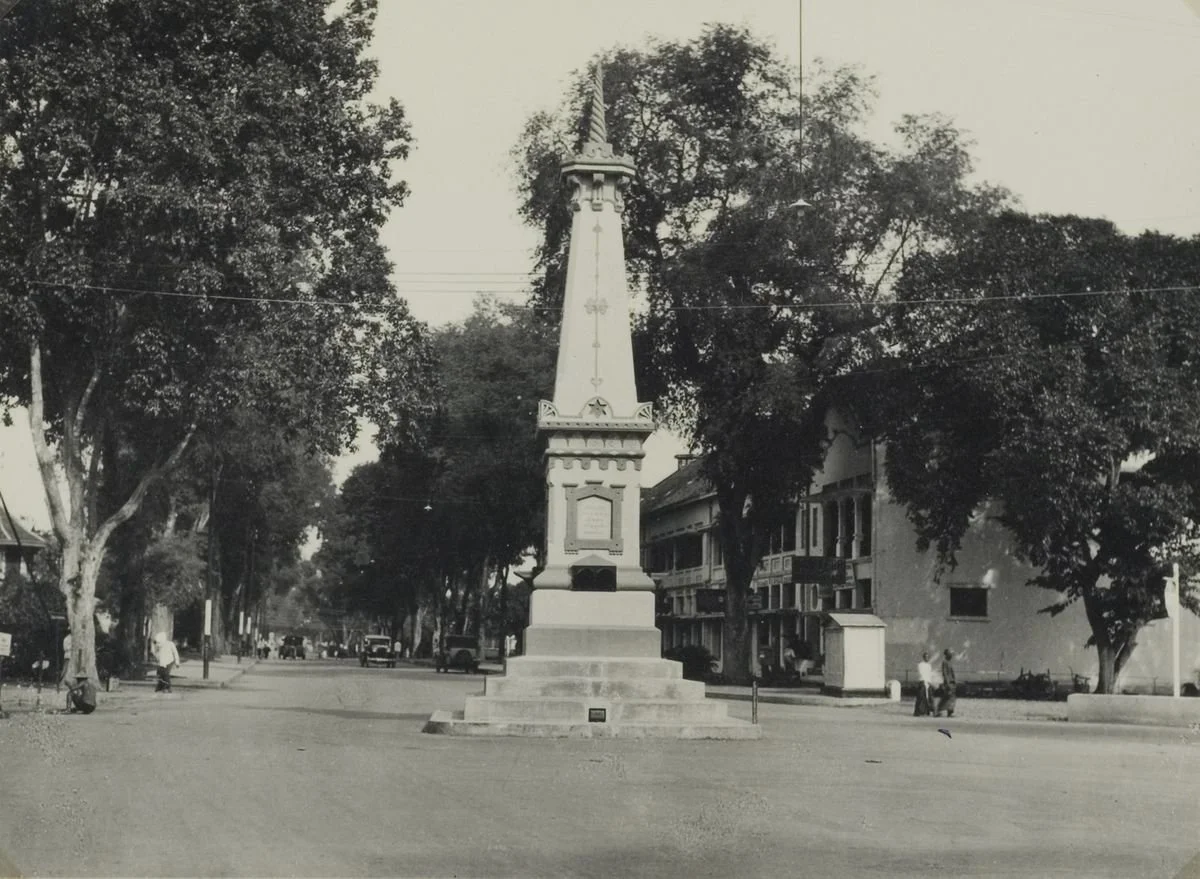
Tugu Golong Gilig: The Unity You Never Knew You Were Standing Under
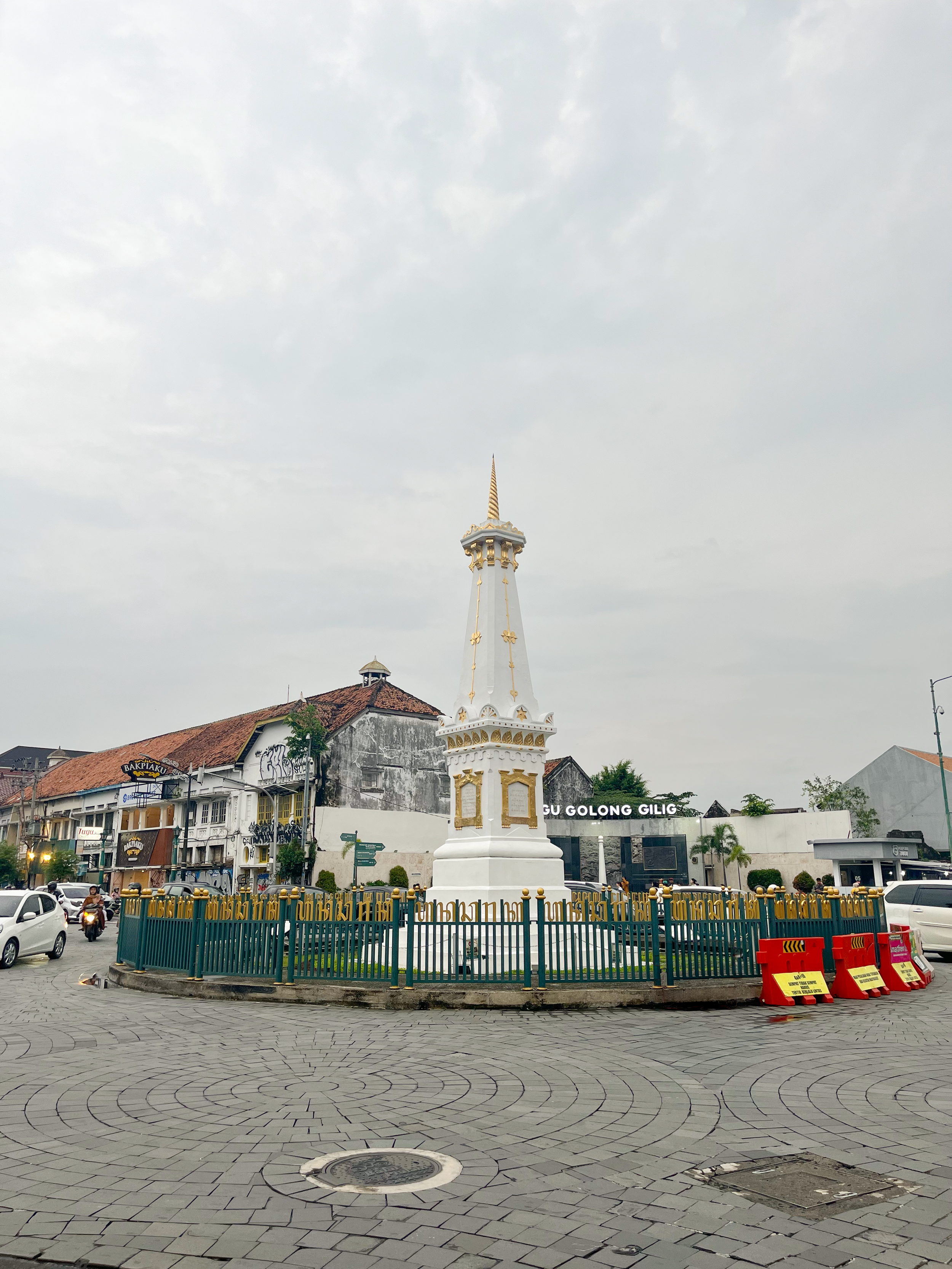
You’ve probably seen the Tugu Yogyakarta itself without knowing the story behind it. It is part of the Cosmological Axis of Yogyakarta and its Historic Landmarks that holds philosophical values of its own. Today, we’re going to talk about Tugu Golong Gilig or Tugu Pal Putih or what we know today as Tugu Yogyakarta.
The cosmological axis that exists in Yogyakarta isn’t based on a literal straight line of multiple important buildings/landmarks, it is rather an imaginary line that was created that points the northmost side of Yogya and the southmost side of Yogya. The line starts with Mount Merapi as the northmost point of Yogya, Tugu Golong Gilig, Alun-alun Utara, Keraton Yogyakarta, Alun-alun Selatan, Panggung Krapyak, then ends with Laut Selatan as the south most side of Yogyakarta. These points also hold meanings within them, Panggung Krapyak symbolize the beginning of life, femininity and the process of maturing, lastly Keraton Yogyakarta symbolize the hardships and challenges of life and the journey of life itself.
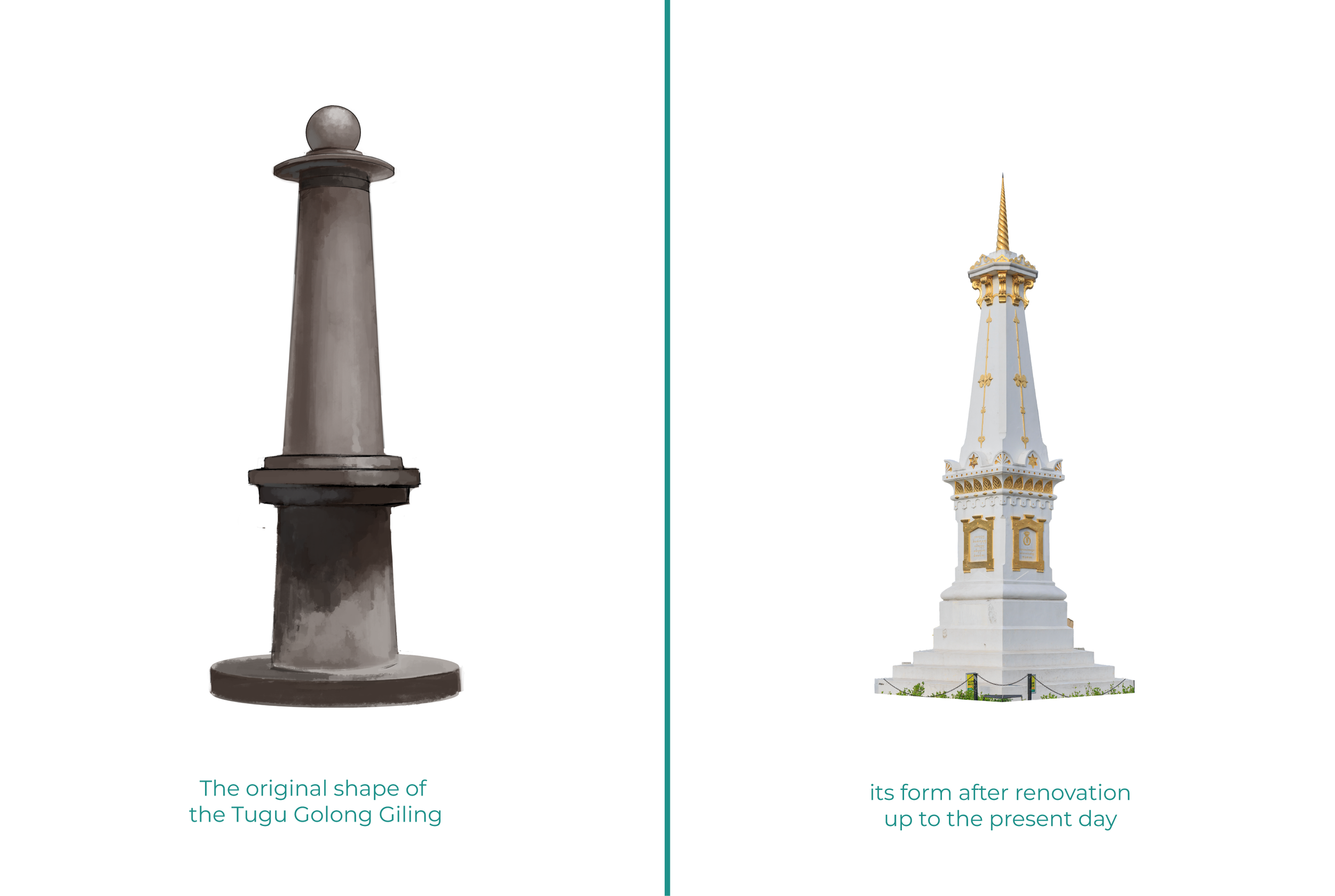
Tugu Golong Gilig was once created by the people of Yogyakarta as a symbol of unity between the king and the people. It was once created in cylinder shape (golong) and the sphere on the top (gilig) that was 25 meters tall and it was painted white with an accent of gold and brown at the top. Manunggaling Kawula Gusti was the philosophical value it is trying to spread, it holds the meaning of It signifies not only the union of the people with the ruler, but also the union of humanity with the will of the Creator.
Unfortunately, in 1867, there was a very big earthquake that hit Yogyakarta destroying multiple historical landmarks and one of them is Tugu Golong Gilig, the landmark was broken about ⅓ part of it. The government left it for a few years until it rolled around to the ruling of Sultan Hamengkubuwono the 7th where it was rebuilt then became the Tugu Yogyakarta as we know today. To preserve the history of it, In 2015 Yogyakarta’s Government built a miniature version of it near Tugu Yogya.
The philosophy, Manunggaling Kawula Gusti, actually became the philosophy of Javanese way of living. This philosophy consist of a few phrase, “manunggal-ing” means “menyatu” or unity, “kawula” means “aku” or i, and “gusti” means “tuhan” or god Overall, Manunggaling Kawula Gusti is interpreted as a state of union between the human being and God. To understand the whole concept of this philosophy, we need to grasp the spirituality of Javanese people. In the Javanese mystical worldview, there is an awareness of the unity of the self as a microcosm, referred to as jagad cilik and the universe as a macrocosm, known as jagad gedhe.
So the next time you pass by Tugu Yogyakarta, whether you're stuck in traffic or just wandering through Malioboro, remember that you're standing at the meeting point of two worlds: the self and the universe, the ruler and the ruled, humanity and its Creator. What looks like a simple white pillar today once carried the weight of an entire cosmology, one that Sri Sultan Hamengkubuwono I built not just as a monument, but as a compass for how to live. Tugu Golong Gilig may have changed shape over the centuries, but the philosophy it was built to hold unity, in every sense of the word, is still very much alive in the way Yogyakarta sees itself today.