

Rice and the Soul of the Archipelago: The Spiritual and Cultural Philosophy of Rice in Javanese and Southeast Asia.
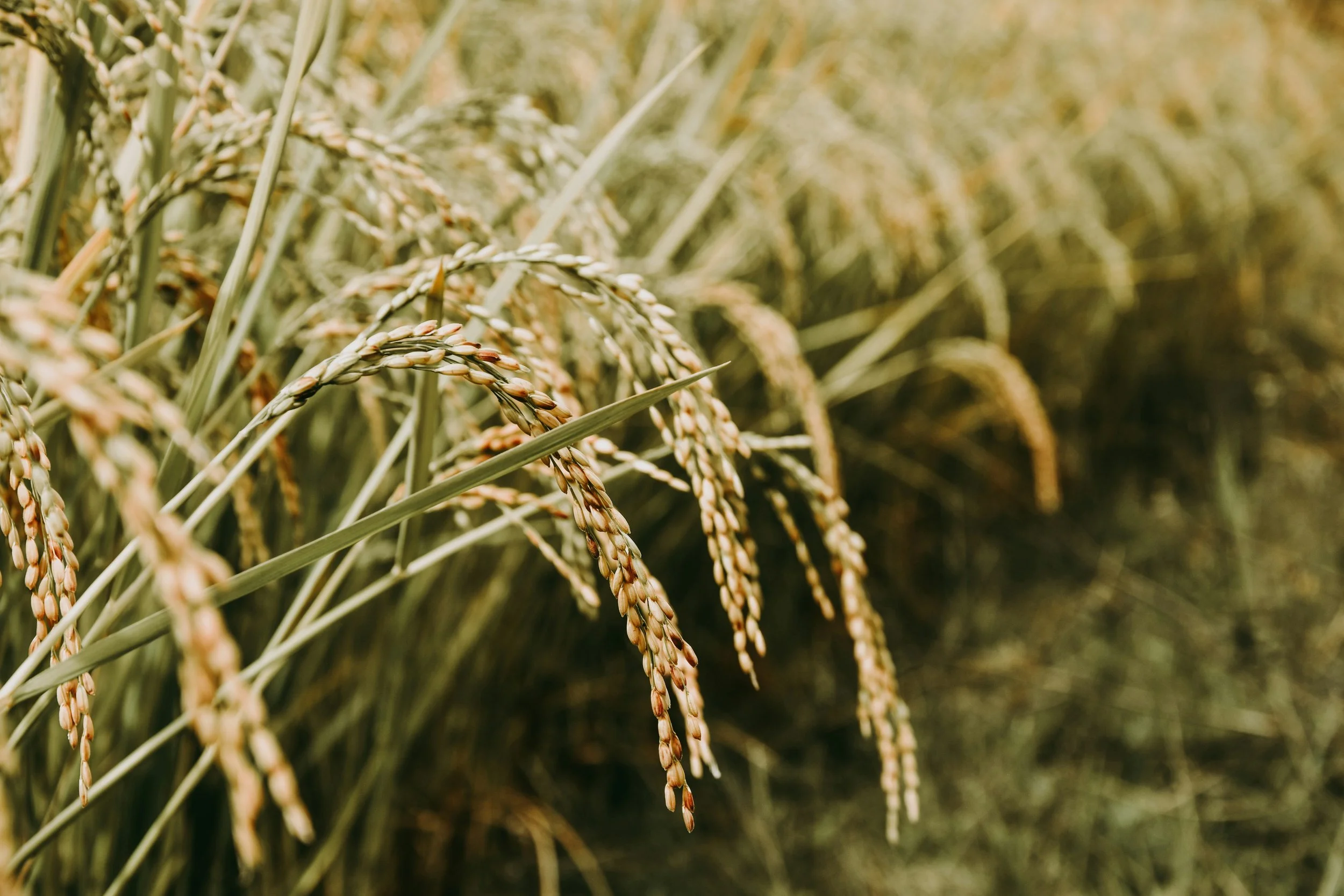
Rice is more than food in Southeast Asia it is memory, cosmology, identity, and the foundation of life itself. Across the region, rice shapes daily rituals, agricultural cycles, gender roles, social hierarchy, and the way communities understand their relationship with nature and the divine.
Anthropologists like Eric Crystal (“The Art of Rice: Symbol and Meaning in Southeast Asian Village Tradition”) note that in Southeast Asia, rice is treated not as a crop, but as a living being with spiritual presence, governed by myths, ritual etiquette, and ancestral values.
Today, we will explore the philosophical meaning of rice beginning with Southeast Asia as a whole, then moving into specific local traditions, ultimately leading into Indonesia and finally into Java, where rice philosophy takes an especially deep and intricate form.
Rice in South East Asia
Across Southeast Asia( Indonesia, Malaysia, Thailand, Vietnam, Cambodia, Laos, the Philippines) rice is not merely an agricultural staple but a sacred companion species.
Common threads appear throughout the region’s myths and rituals:
Rice as a Sacred Gift
Many Southeast Asian traditions tell stories of a Rice Mother or Rice Goddess, a divine being who sacrificed herself to give humans rice. These myths teach that rice is alive, must be treated with respect, and humans must reciprocate with gratitude and ritual care. This worldview appears in multiple folklore as a goddess of rice like Dewi Sri from Indonesia, Mae posop (โพสพ) from Thailand, Po Ino Nogar from Cambodia, and Nang Khosop from Laos. They are the figures that represent fertility, life, protection and cosmic balance.
Rice as Social Philosophy & Moral Education
Rice cultivation requires cooperation, patience, timing, and respect for the natural world. Thus, rice philosophy naturally shapes communal values like Gotong royong that can mean shared labor between neighbors, Ritual calendars tied to the lunar cycle, Taboos against wasting food, and Respect for elders who preserve agricultural wisdom.
Rice itself also teaches a moral worldview like preserving harmony with nature, humility and patience considering the time and effort it takes to plant rice, but also managing balance between human needs and environmental limits and not taking it for granted, then at the end people have to share with the community before thinking individually.
Given Southeast Asia’s size and ecological richness, rice takes on unique meanings in each area.
In Mainland SEA (Thailand, Laos, Cambodia, Vietnam) Rice is seen as spirits and dominates cosmology. They also often have harvest rituals that express gratitude to the universe, showing harmony between humans and earth while also protecting the village spiritually. In Vietnam, rice is linked to ancestral worship while in Cambodia & Laos rice ceremonies involve monks blessing the fields.
Moving to the Maritime SEA (Indonesia, Malaysia and Philippines) rice philosophy blends indigenous animism with hindu-buddhist layers, and also later on influenced by Islam. Rice often appears in story cycles, myths and ritual offerings. In the Philippines, the Ifugao rice terraces represent rice as landscape philosophy (nature shaped by humans in balance with the divine). But in Malaysia, paddy rituals emphasize purity, family, and cosmological order.
In conclusion, Southeast Asian cultures share several core beliefs. Rice itself carries the meaning of life, identity and survival, then the process of growing rice is seen as a sacred responsibility, and then eating rice is like a moral act to show that they are appreciating what the universe gave them, while wasting rice is what they avoid completely because it is seen as a spiritual offense to the universe.
Rice in Indonesia
Indonesia’s philosophy of rice has deep roots in Austronesian cosmology, animism, Hindu-Buddhist influences, and later Islam. Academic works such as Nostalgia, Jati Diri, dan Simbol Sakral Padi and studies on Sasak rice rituals show that rice is viewed as, A symbol of identity (jati diri), A sacred being with spirit (roh padi), A medium connecting humans to ancestors and the cosmic world.
In some parts of Indonesia, there are ceremonies held where rice is also seen as a cosmic order, Indonesians symbolize the planting process as “birth”, the Rice plant growing progress symbolize life, the harvesting symbolize death and rebirth, while the storage process is to symbolize how rice continues the life of community around it. This cycle mirrors Indonesian philosophies of alam, manusia, and leluhur (nature, humans, and ancestors).
Rice holds social structural meaning in Indonesia by shaping cooperation through gotong royong, since its cultivation relies on shared labor. It also defines gendered ritual roles, with men responsible for land preparation and irrigation, while women oversee seed selection, planting, and storage. This reflects the widespread belief that rice is a living, nurturing presence, symbolically associated with femininity and motherhood. These meanings are upheld through agricultural etiquette and taboos, including the prohibition against wasting rice.
In modern Indonesian literature, rice fields symbolize nostalgia for village life, resistance against modernization, ecological consciousness and harmony between humans and nature.
Rice in Java
Java holds one of the richest rice philosophies in Southeast Asia. This worldview is shaped by animist and Austronesian roots, Hindu-Buddhist cosmology, Kejawen spirituality, Islamic reinterpretations, and long-standing agricultural rituals. For the Javanese, rice is not merely food, it is a sacred gift from Dewi Sri, the goddess of life, fertility, prosperity, and moral balance. Her mythology teaches that rice must be treated with deep respect, almost like a daughter. Rice is believed to be alive, carrying spiritual presence, and caring for it becomes a moral responsibility tied to living in harmony with nature. Rituals such as wiwitan (the first harvest) and selamatan padi express gratitude while reaffirming the cosmic order between humans, nature, and the unseen world.
Javanese proverbs also reflect how rice forms the foundation of social and ethical life. One well-known saying, “urip iku urup” (to live is to give light), is closely connected to rice culture. Javanese communities are known for their willingness to share, even when resources are limited. This proverb teaches that life gains meaning when it benefits others, much like rice is meant to be shared. Another guiding value, tetep, tepa, lan sabar (consistency, empathy, and patience), mirrors the rice-growing process itself like farmers must patiently nurture the crop over time, just as people are encouraged to cultivate humility and generosity in life. Meanwhile, “aja mubadzir” (do not waste) reinforces a deep respect for food. In Javanese households, wasting rice is strongly discouraged, folklore even warns that rice will “cry” if thrown away, reminding people that rice is alive and deserves care.
Rice cultivation also serves as a powerful metaphor for human character. The soil represents the heart, the seed symbolizes intention, water reflects compassion, and the harvest reveals the results of one’s actions in life. Structural-anthropological studies of Nusantara rice myths show that Javanese people view rice as part of a greater cosmic balance, one that connects humans, nature, and the unseen spiritual realm. Offerings (sesaji) placed in rice fields are believed to maintain this harmony.
Rice continues to appear at the center of Javanese ritual life. It is embodied in tumpeng, a ceremonial dish symbolizing gratitude and the cycle of life, in slametan, a communal ritual where rice is shared to preserve social harmony; in nyadran, an annual ancestral pilgrimage; and in tirakatan, a practice of spiritual reflection. In every form, rice remains a symbol of blessing, continuity, and the enduring connection between people, their land, and their ancestors.