

Raden Saleh: Creativity, Resistance, and the Indonesian Modern Art Pioneer.
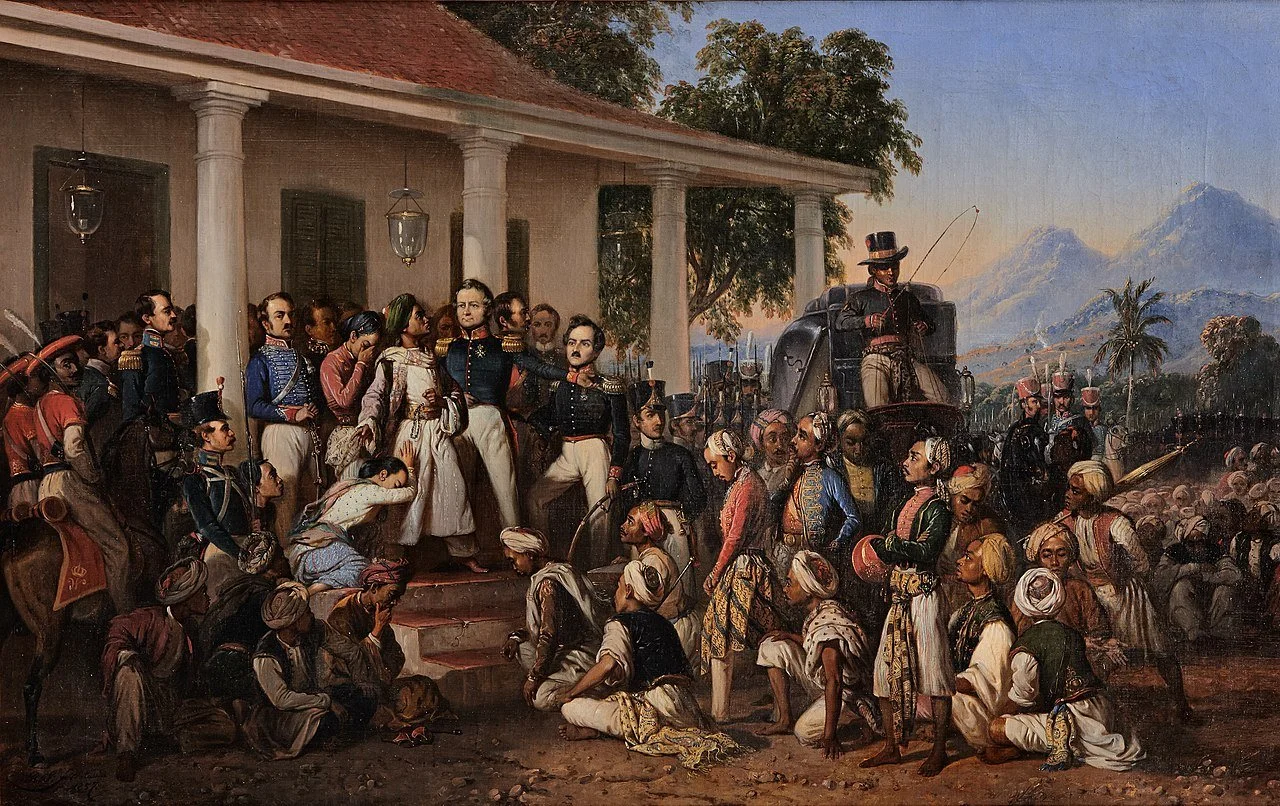
Raden Saleh Syarif Bustaman is one of the most pivotal figures in Indonesian cultural history, a painter that is also a bridge between worlds. Raden Saleh was born in Terboyo, near Semarang on the north coast of Java in 1811. He’s the first Indonesian artist to master European fine art traditions while retaining a deep sense of Javanese culture in it. His creativity did more than just producing beautiful paintings, it has reshaped and influenced how Indonesians saw art, identity and power.
Raden Saleh came from a Javanese aristocratic family connected to the colonial administration. His uncle at the time was Semarang’s Regent, this background gave him the privilege to access European education during the Dutch colonial period in Indonesia. Unlike most indigenous figures, he was allowed to travel to Europe, where he spent more than 2 decades studying and working in the Netherlands, Germany, and other cultural centers.
In Europe, he immersed himself in Romanticism, a movement in arts that emphasized emotion, drama, nature, and individual expression. He fell in love with Dresden, Germany where he spent 5 years studying arts. It was there that he first felt truly accepted and treated as an equal human being. He also studied oil painting, human anatomy, perspective, and composition that were very unfamiliar in Javanese visual culture at the time. Yet, rather than becoming a European painter who happened to be Javanese, his arts became something far more complex. It's shortly described as Javanese artist who uses European art style in his painting to tell his own stories.
Raden Saleh’s creativity lies in his ability to unify contrasting worlds:
European techniques including oil painting, realism, dramatic lighting, and large scale historical canvases
Javanese worldview includes symbolism of things, respect for hierarchy, spiritual presence, and subtle resistance.
This fusion can be seen in his landscapes of Java, volcanic eruptions, dense forests, and wild animals where nature appears powerful, alive and sometimes even uncontrollable. These were not merely scenic views, they reflected a Javanese understanding of nature as a spiritual force rather than something to be dominated.
Raden Saleh worked under colonial rule, but he was never simply a colonial artist. His position was paradoxical, celebrated in European courts and admired by colonial elites, yet deeply aware of his identity as a colonized Javanese subject. This tension shaped his creativity. Rather than openly confronting colonial power, Raden Saleh embedded critique within symbolism, posture, and perspective. He used his arts to criticize the government at the time. One of the best examples of this is his famous painting “Sebuah Banjir di Jawa” (1865), from the painting we can see that even in difficult conditions like flood, indigenous people had to help each other with no help from the colonizer.
His works demonstrate that resistance does not always take the form of rebellion, it can also exist in representation, framing, and who is given dignity within an image. In this way, Raden Saleh pioneered an early postcolonial consciousness in Indonesian art, long before nationalism became an organized movement.
Raden saleh is also widely considered as the father of modern indonesian painting. His influence can be traced in several key ways:
1. Introduction of Fine Art Traditions
He introduced oil painting, canvas-based works, and academic realism to Indonesia. Later generations of Indonesian painters built upon these foundations.
2. Art as Intellectual Expression
Before Raden Saleh, visual art in Java was largely tied to ritual, craft, and court traditions. Raden Saleh positioned painting as a space for intellectual, political, and emotional expression.
3. National Identity Through Art
His reinterpretation of historical events, especially Diponegoro, helped later artists see art as a medium for reclaiming Indonesian history from colonial narratives.
4. Inspiration for Modern Indonesian Artists
Artists such as S. Sudjojono and later nationalist painters drew inspiration from Raden Saleh’s belief that art must carry truth, context, and identity, not just beauty.
Today, Raden Saleh is remembered not only for his paintings, but for what he represents: the possibility of cultural dialogue without loss of self. He proved that Indonesian identity could engage with global modernity while remaining rooted in local values.
His life and work remind us that creativity is not merely about innovation—it is about positioning oneself in history, choosing how stories are told, and deciding whose perspective matters.
In a time when Indonesia was seen through colonial eyes, Raden Saleh painted back.