
Prambanan: Where Ancient Wonders Stand Together
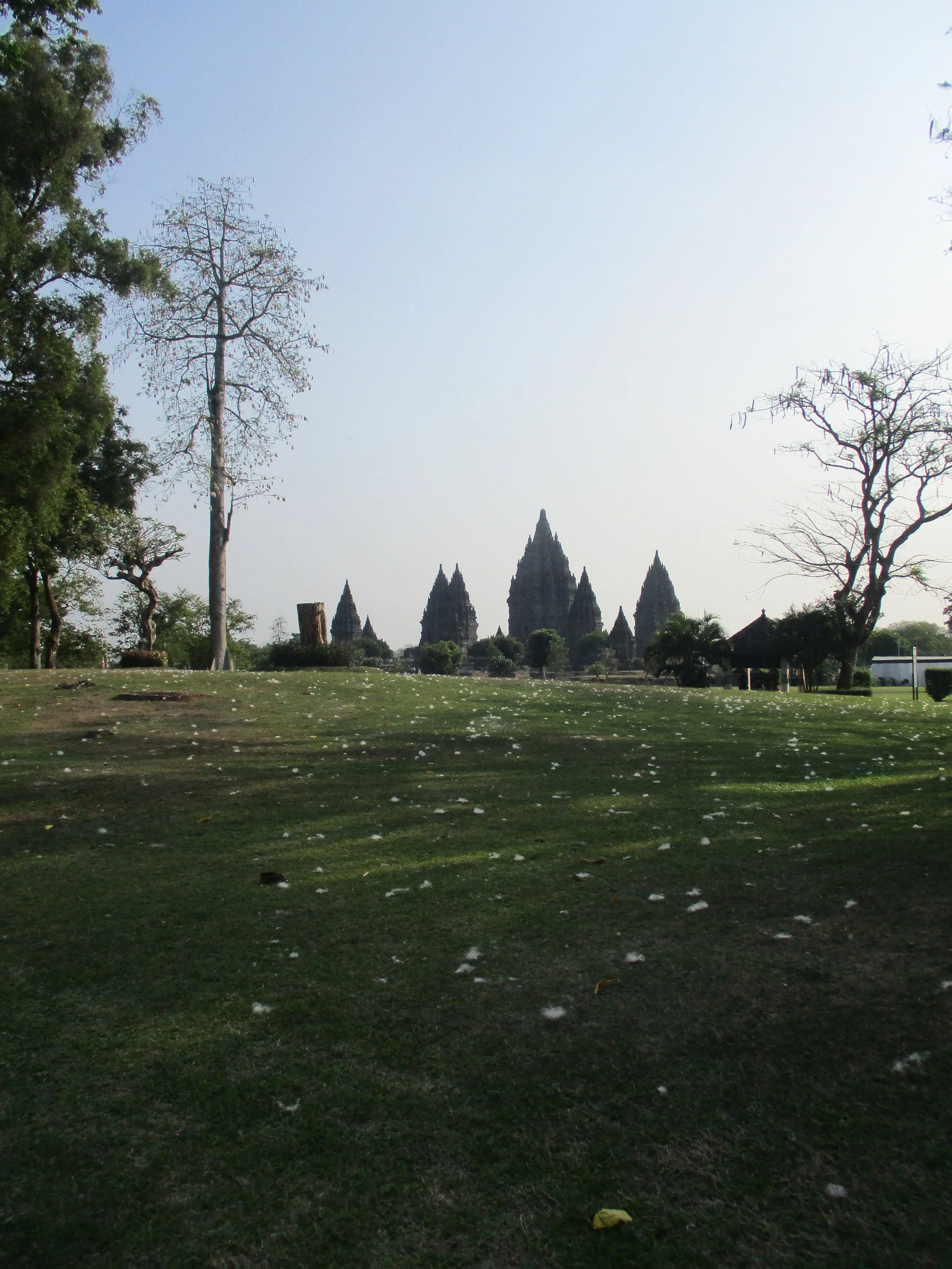
At first glance, Candi Prambanan looks like a monument reaching toward the heavens. Built more than a thousand years ago, its towering temples and intricate carvings preserve stories about gods, kings, and the beliefs of ancient Java. But Prambanan is more than an architectural masterpiece. It reveals how religion shaped royal authority, how architecture expressed ideas about the universe, and how stories from India became part of Javanese culture.
Among these stories, the Ramayana stands out. Carved into the temple walls, this epic of love, loyalty, and conflict connects Prambanan’s religious significance with traditions that continue to inspire Indonesian art and performance.
Prambanan developed during the ninth century under the influence of the Ancient Mataram Kingdom. One important historical source is the Śivagrha inscription, dated to 856 CE, which provides evidence of the temple’s historical and religious setting.Building such an enormous complex required skilled artisans, builders, religious specialists, and considerable resources. Prambanan was not simply a royal monument; it reflected the beliefs and abilities of a wider society.
Rather than one enormous building, Prambanan consists of hundreds of temples and shrines arranged in a carefully planned layout.
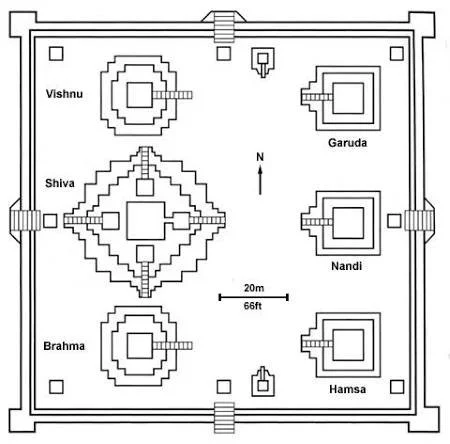
Prambanan originally contained 240 temples, according to UNESCO. Many smaller structures now survive only as ruins or foundations, but they reveal that the site was conceived as a complete sacred environment, not merely a collection of impressive buildings.
Prambanan’s main temples represent three major Hindu deities:
Shiva, associated with transformation and destruction within the cosmic cycle.
Vishnu, the preserver of cosmic order.
Brahma, the creator.
The tallest shrine is dedicated to Shiva, highlighting the importance of Shiva worship at the complex.
Yet Prambanan was part of a much wider religious landscape. Nearby stand the Buddhist temples of Candi Sewu, Candi Bubrah, and Candi Lumbung. Their presence shows that Hindu and Buddhist traditions flourished within the same broader region.
Another fascinating site is Candi Ijo, a Hindu temple complex southeast of Prambanan. Unlike Prambanan’s monumental structures on the plain, Candi Ijo sits on a hill, with temples arranged across ascending terraces. Its layout creates a different relationship between sacred architecture and the natural landscape.
Together, these sites reveal the diversity of ancient Java’s religious architecture. Candi Ijo is Hindu, while Sewu, Bubrah, and Lumbung are Buddhist, each offering a different perspective on the region’s spiritual history. One of Prambanan’s most remarkable features is its series of Ramayana reliefs, which transform the temple walls into a monumental storytelling space.
The Ramayana is an ancient Indian epic traditionally attributed to the sage Valmiki. It follows Prince Rama, whose wife, Sita, is abducted by Ravana, the ruler of Lanka.
Rama sets out to rescue her, forming alliances with Sugriva and Hanuman. After Hanuman finds Sita in Lanka, Rama and his allies prepare for battle, ultimately defeating Ravana and rescuing her. Through centuries of trade, religious exchange, and travel, stories and ideas moved between South Asia and the Indonesian archipelago. The Ramayana became part of Southeast Asian culture, but it was not simply copied. Javanese artists and storytellers adapted it through their own traditions.
At Prambanan, artists carved selected episodes into stone, allowing visitors to follow the narrative as they moved through the temple. The reliefs were more than decoration: they brought a sacred story into the physical experience of the complex.
The Ramayana reliefs demonstrate how ancient Javanese artists communicated stories without written dialogue. Characters’ gestures, postures, and positions help convey relationships and events, while sequences of panels create a sense of narrative progression.
The experience resembles following a story through a series of images. Yet the reliefs also reveal something deeper: how Javanese artists interpreted an epic that had travelled across cultures and transformed it through local artistic conventions.
The story also carries religious meaning. In Hindu traditions, Rama is understood as an avatar of Vishnu, associated with preserving cosmic order. His journey can therefore be interpreted through themes of duty, righteousness, loyalty, and the restoration of balance.
At Prambanan, the Ramayana connects the adventures of its characters with the religious ideas expressed through the temple’s architecture.
Prambanan’s history did not end when its temples were completed. Over the centuries, earthquakes, environmental forces, and changing political circumstances contributed to damage and decline. Many structures eventually fell into ruin. Modern archaeologists and conservation specialists have worked to document, reconstruct, and protect the complex. The 2006 earthquake caused further damage and highlighted the continuing challenges of preserving the monument.
Today, restored structures stand alongside original stonework and archaeological remains. Prambanan’s survival is not only a legacy of the past, but also the result of ongoing conservation.
No discussion of Prambanan feels complete without the legend of Roro Jonggrang. In the popular tale, Bandung Bondowoso wants to marry Roro Jonggrang. She agrees on one condition, he must build a thousand temples in a single night. With supernatural help, he nearly succeeds. Roro Jonggrang then tricks him into believing dawn has arrived, causing the work to stop before the final temple is completed. Furious at the deception, Bandung Bondowoso curses her and turns her into stone.
The story is often associated with Prambanan’s many temples and a statue identified in popular retellings as Roro Jonggrang.
However, this is folklore, not a verified account of the temple’s construction. Its importance lies in cultural memory, legends that help communities connect physical landscapes with stories passed down through generations.
Prambanan is one of Indonesia’s most significant examples of classical Hindu architecture and a UNESCO World Heritage Site. Its temples preserve evidence of ancient religious beliefs, architectural knowledge, artistic skill, and cultural exchange. The surrounding landscape adds another layer to its story. From the Buddhist temples near Prambanan to the terraced Hindu sanctuary of Candi Ijo, the region reveals a network of sacred places shaped by different traditions.
Prambanan also reminds us that heritage connects the past with the present. Its carvings tell stories, its ruins reveal the challenges of preserving history, and its legends show how communities continue to give meaning to ancient places.