

Malam satu suro celebration in Yogyakarta and what makes it different.
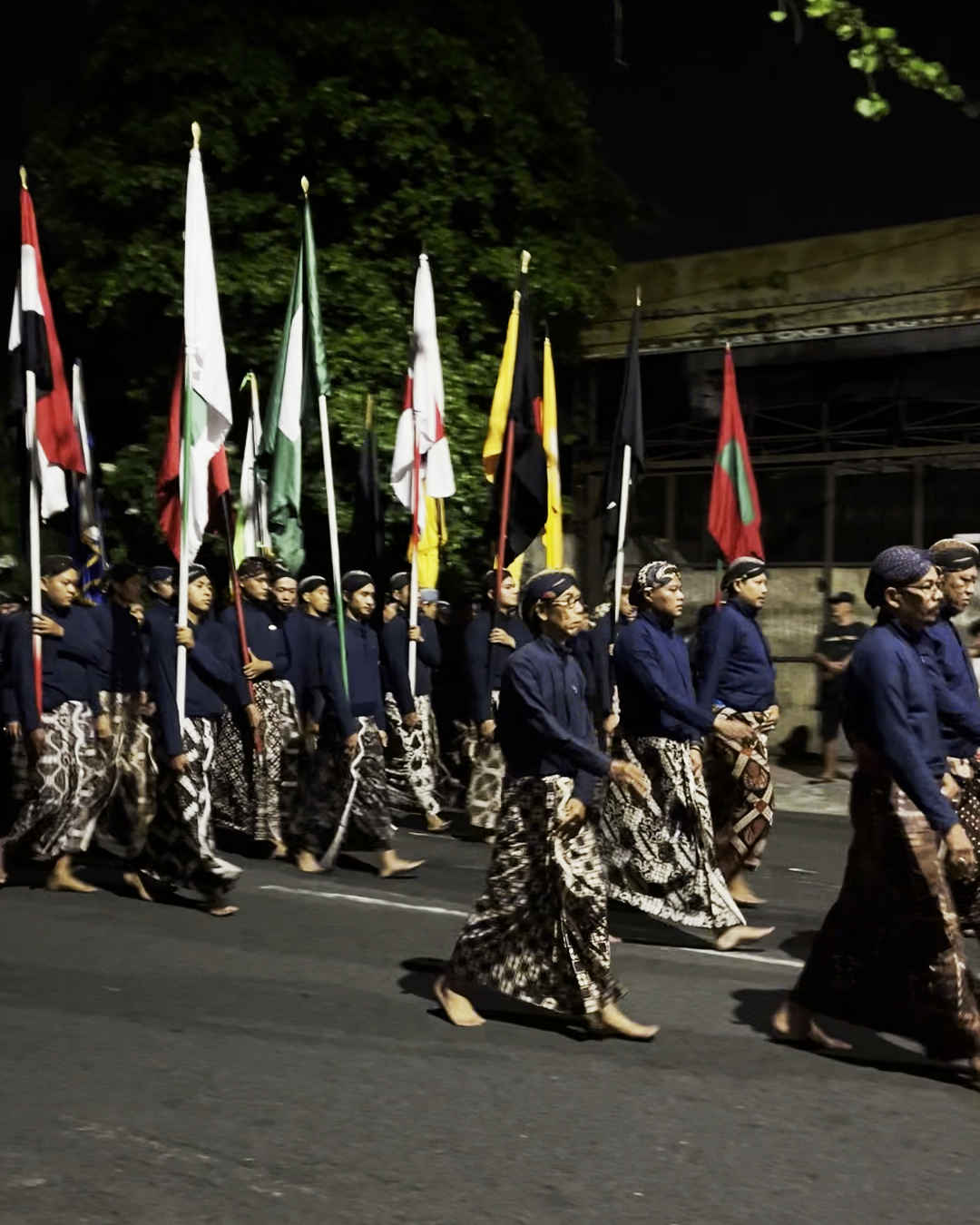
It is called Topo Bisu Lampah Mubeng Benteng, Topo Bisu stands for Bertapa Dalam Diam or meditating in complete silence while Lampah Mubeng Benteng means Walking around the fort. This tradition has been done for a long time, it was first started around the reign of Sultan Hamengkubuwono the 2nd and after they passed this tradition down generations through generations. The word “Suro” comes from the word “Asyura”, which means the 10th day of muharram month. The first night of Suro is believed to be New Year's Eve in the Javanese calendar, and is considered a sacred and meaningful moment.
Malam satu suro, is a very special moment for muslims in Indonesia, because all of the good deeds people do on this day will be multiplied. This day is also considered sacred and holds a lot of meaning. This is because it serves as a powerful time for spiritual reflection, self-cleansing, and seeking blessings.
This ritual started not by just walking, it was started by the Abdi dalem or Royal workers singing javanese traditional song called tembang macapat in bangsal Pancaniti, Keben keraton Yogyakarta. This song sounds like:
Sing sira aja lali,
Lelakon iki ora sepele,
Wulan pisan kawitané,
Tuwuh wirang kang nora prayoga,
Nanging yen waspadha,
Tumrap ing jaman kitha,
Suro dadi cahya,
Kang nuntun urip becik mulya,
Ayo padha eling,
ndedonga nuju rahayu.
This song is not just a simple song, it is rather a sacred procession of reciting traditional Javanese poetry containing prayers and praise. The first part shows that malam satu suro is a holy moment to introspect, come back to ourselves and also bring yourself closer to god or your creator. The second part plays as a reminder that we all need to be grateful for everything, always Praying for safety, and hoping the new year brings enlightenment and blessings. After singing they’ll start the walking ritual. They started the silent walk from Pojok Beteng Kulon or The southwest side Bastion of the Fortress of Yogyakarta and ended in Alun - Alun Utara or North square of Yogyakarta. Each regency brings their representative since not everyone can walk in the front side of this ritual. But that doesn’t mean that ordinary people couldn’t join, they could but just not in the front or the same place as the representatives.
There are some rules that need to be followed by participants, first is to dress up modestly and politely, every clothing piece needs to be free from any attributes of any community, organisation, or political party and lastly people needs to keep the peace while also keeping the cleanliness of the surroundings that they’ll pass.
There are a lot of myths surrounding malam satu suro and they are very popular among the people. There are some taboos regarding the activity during the month of suro, especially on that date. These rituals are believed to bring blessings. However, on the other hand, various myths about the malam satu suro are believed to bring bad luck to those who violate certain taboos. The First Night of Suro, but some people still believe in this myth. Some taboos often associated with the First Night of Suro myth are as follows:
Prohibition to go out at night, it is believed that it is better to stay inside especially at night because it’s been said to bring bad luck or negative things.
It is bad to hold a party or any celebrations, a lot of people believe it is not good to have celebrations in the month of suro, it is seen as taboo and will lead to disaster, however there are no valid prohibitions against marrying during certain months, including muharram.
Another prohibition that people must follow to participate is to be silent the whole entirety of the ritual.
It is not allowed to talk badly about anything and swear, people believe that if you talk badly or swear on this sacred month it will definitely happen, and it is said that is also associated with some Javanese people who believe in the existence of supernatural beings during the month of Suro. They will come out and seek out people who are negligent in remembering and being alert (eling lan waspada).
It is forbidden to move or build a house. Moving or building a house is not recommended on the first night of Suro because Javanese people believe that this can bring bad luck.
There is another tradition that the Yogyakarta sultanate does, it is called Jamasan Pusaka or Ngumbah Keris (Washing/cleaning heirlooms) on the first night of Suro. In this particular tradition, the royal families held a ritual where every heirloom belonging to the Yogyakarta Palace is cleansed or bathed. These heirlooms include weapons, carriages, horse riding equipment, flags, vegetation, gamelan, manuscripts, and others. Jamasan Pusaka is performed to honor and care for all heirlooms owned by the palace. However, according to the Yogyakarta Palace website, there are two reasons for carrying out jamasan pusaka: technical and spiritual. Technically, this tradition is intended to care for objects that can be said to be inherited from the past.
The last tradition that is usually held in malam satu suro is Sedekah Laut or Sea Almsgiving. Since the palace is quite far for people that stay in Baron beach and Kukup beach, in Tanjungsari District, Gunungkidul Regency, Yogyakarta. The tradition starts with kenduri or a communal feast participated by every person that uses the sea as a place for them to earn a living. After the feast, food and mountains containing agricultural produce are carried by residents dressed in traditional attire. Upon arriving at the shore, an elder, or someone respected by the local community, opens the ritual with a prayer. After scattering flowers and offerings, the four mountains are then lifted onto a fishing boat and taken out to sea.
From every tradition and rituals that people do on this night, there are some philosophies we can learn. First it is to control yourself, it is teaching us not to let our emotions and our mind control us like emotional regulation, to remind us to the creator of life and of us, praying for safety and health, while also asking for peace and lots of gratitude.