

Kedhaton Ambarrukmo, the living glory of Yogyakarta’s sultanate.
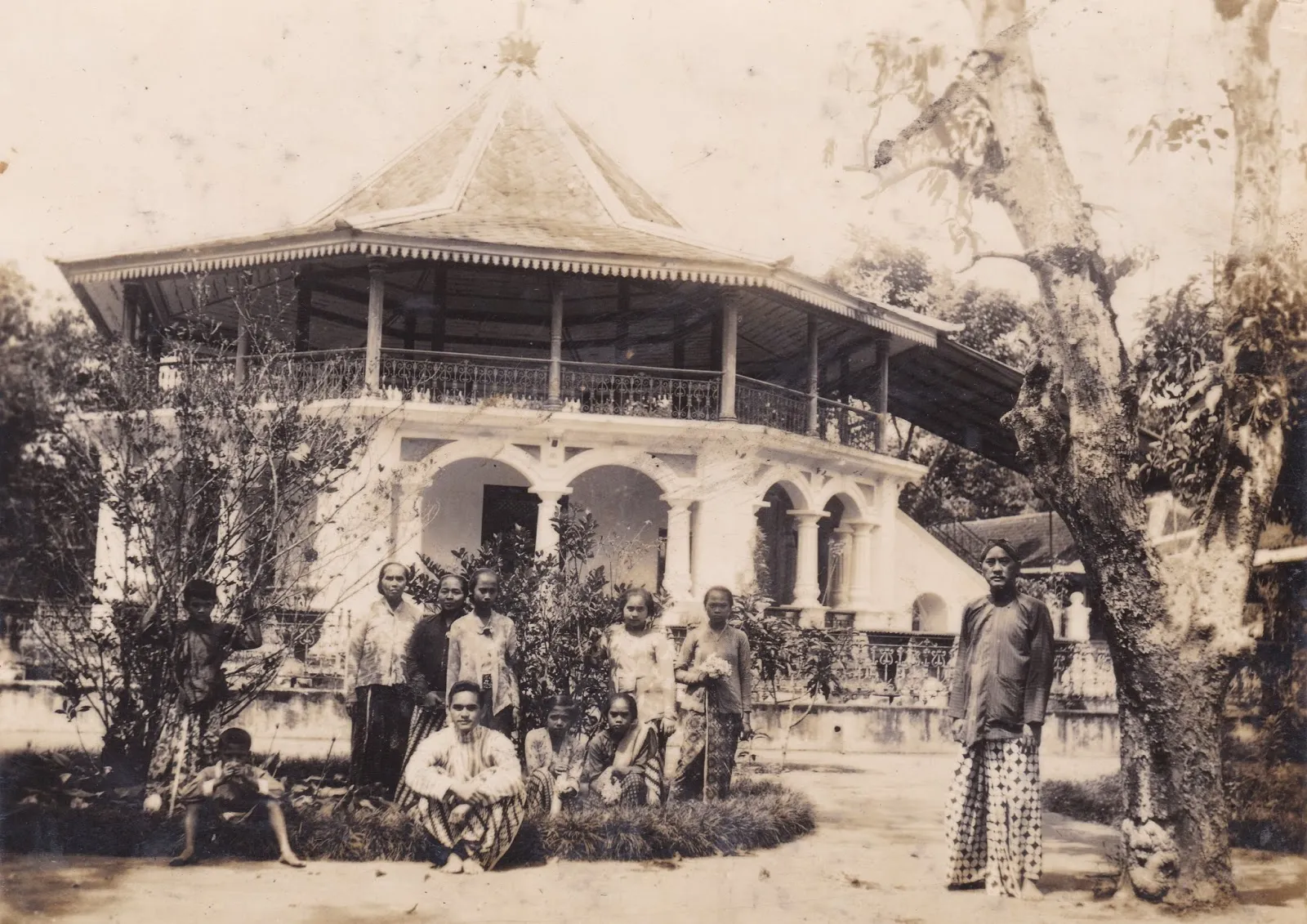
If you first come to one of Yogyakarta's malls, you can see a traditional styled building in this mall called pendhopo. It is visible when you exit the basement parking spot or when you arrive at the lobby entrance of the mall. This mall is called Ambarrukmo plaza, now you might wonder why it has the traditional building when it is supposed to be a mall? Well we’re going to explain that to you in today's article.
Kedhaton Ambarrukmo is closely connected with the history of the Palace of Yogyakarta, it was once a very important place to the palace. Back then, this place was called “Jenu” as the royal garden. This place was used as a place to rest, welcoming the palace guests and conducting negotiations with foreign parties. One of the meetings was of Sultan Hamengkubuwono the 2nd with Governor General Daendels, He requested for the meeting to be done far from the palace and they granted his wish. He did this because he wanted the society to acknowledge his charisma, since governor general usually came with such long retinue that his power was evident. A conflict emerged related to the protocol the palace has about the welcoming ceremony. Daendels proposed a protocol that couldn’t be accepted by the Sultan because it was considered demeaning a king. Sri Sultan could not agree to sit on a chair that has the same level as Daendels, His chair should be higher. Even so, this almost made Daendels cancelled his visit but, fortunately they reached an agreement, since Daendels did not want to sit on a chair lower than the Sultan, the chair which Daendels sat on made higher by giving him a dingklik (a stool) so that now both chairs had an equal height.
There was a halt on the development of Kedhaton Ambarrukmo after the death of Sultan Hamengkubuwono the 2nd until it was Sultan Hamengkubuwono the 5th. The Pendhopo that stands to this day was built by him, it was used as a place where the king could rest while waiting for the arrival of the Dutch envoy, the envoy of Kasultanan Surakarta and Pura Mangkunegaran. This tradition is still preserved until Sultan Hamengkubuwono the 6th where he enlarged the building without changing any of its shape and later, “Jenu” got its name changed into “Harja Purna”.
In the 1800s, a very big earthquake happened that crushed a lot of historical buildings in Yogyakarta, one of the impacted buildings was Harja Purna. It was evident after a while that The 7th Sultan was trying to rebuild the economy around Yogyakarta by taking chances on the business field. In his era, he decided to reconstruct Harja Purna to later become his house after stepping down from the palace. It was then built following a strong Javanese tradition. The division of space at Harja Purna adopts the concept of the division of space at the Yogyakarta Palace, namely sacred space, semi-sacred space, and profane space. It is also coherent with philosophies that the palace follows, Sangkan Paraning Dumadi, Manunggaling Kawula Ian Gusti, dan Hamemayu Hayuning Bawana.
The first philosophy Sangkan Paraning Dumadi means the human life cycle. This is related to the linear axis of Kedathon Ambarrukmo, from north to south (bale kambang to alun-alun) which means the process of humans coming back to their creator spiritually, meanwhile on contrary from south to north (alun-alun to bale kambang) symbolize the human that’s ready and certain of what they’ll choose in their life. Manunggaling Kawula Ian Gusti has two meanings, the first one is how leaders, their people, and the integrity of human life for God unite. The second meaning holds a place inside the ageng (one part of the room) that has senthong to store heirlooms and used as a sacred place. Meanwhile, Hamemayu Hayuning Bawana means we as a human being should strive for safety, preserving life, and protecting against damage by maintaining a balance in the relationships between living things.This was shown by how the pendhapa, alun alun, the front garden and the garden. The pendhapa is a place for human self-actualization and a form of harmony between residents and relatives and the surrounding community, the town square is a public space as well as a yard, park and garden as an effort to achieve harmony with fellow humans and nature.
Kedhaton Ambarrukmo is built with the intentions of showing the owner’s character, the openness and how welcoming they were. The last owner, Sultan Hamengkubuwono the 7th is still remembered by his people even long after his passing. His traditions and habits are still followed by his ancestors to this day, the habit of drinking tea like royalties “Patehan Royal High Tea”. Nowadays, Kedhaton Ambarrukmo is used for cultural events in hopes to preserve the culture that has been done generations through generations in Java, it is also used as a place to showcase gamelan collections of Keraton.