

Kebaya: A Fabric of Indonesian Women Identity
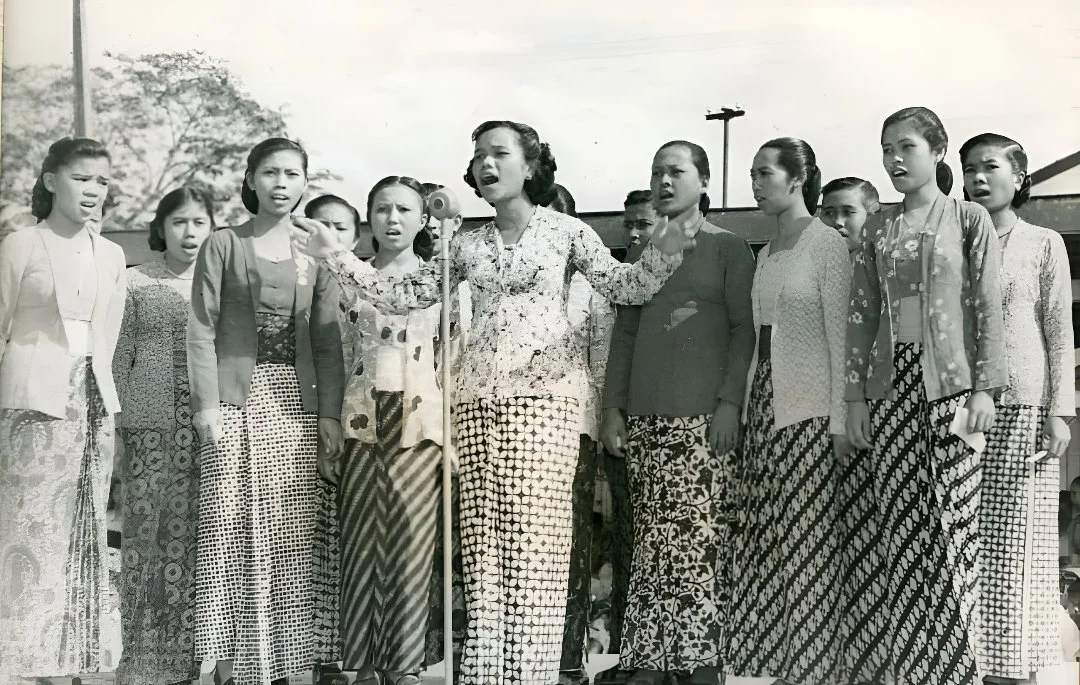
There are clothes you wear. and then there are clothes that carry history. The kebaya is not only clothes you wear, but it also carries history. Across Indonesia, from Bali, Betawi and Java, the kebaya is more than a blouse. It is a quiet language of identity, femininity, and cultural memory, constantly evolving, yet deeply rooted.
People believed that the word “kebaya” came from Javanese term Kebyak but then this theory later faced difficulties because kebaya existed before the term even existed, at the time common people still use kemben (cloth wrapped around the body without sleeves). Then, there’s one theory that has a strong possibility, the term “kebaya” is actually based on the Arabic word “abaya” that means clothing or robe. This alone tells us something important: the kebaya is not born from a single origin, but from encounters like trade routes, migration and cultural exchanges. The kebaya is, at its core, a hybrid. A product of negotiation between cultures, between needs, between identities.
This record opened two possibilities, Javanese society may have been adopting islamic customs and the clothing styles from Arab and Persian merchants, but locals might also have simply adopted the clothing style through cultural exchange without adopting the same religious beliefs. Women with arabic and persian descent wore clothes called “Baju Kurung” and then later indigenous women started to adapt baju kurung into local taste and styles. While baju kurung is more closed tunic with long sleeves, some women felt that it’s not the best type of clothes to wear in the tropical weather. Instead, they turned it into kebaya, with the front opening fastened with buttons, brooches, or pins. The kebaya is also a little bit more in the fitted body style, while baju kurung is more oversized without showing any shape of the body. The choice of colors of kebaya itself pairs naturally well with traditional lower garments such as batik or sarongs.
In Java, Kebaya was known as a particular outfit that’s used by the descendants of the monarchs around the 1500s. The wearing of Kebaya was determined by social class. The material of kebaya worn by the nobles and royal families are made from lace, velvet or silk. Even the Dutch women chimed in to wear kebaya, theirs are shorter shapes and cuts with different embroidery patterns (shaped like flowers from Europe). Later, the common people also started wearing the kebaya. Javanese kebaya has its own philosophy, it hopes that women could adapt, be graceful, gentle, and independent when taking care of themselves. Wearing the jarik bottom symbolises gracefulness of a woman, the tightly wrapped cloth forces them to move in a slower and gentler way. Apart from that, there’s a part of kebaya called Stagen that’s used as a “belt” that symbolises immense patience.
Through kebaya, society could read you: your class, your race, your place. And yet, history shifted its meaning again. As Indonesia moved toward independence, the kebaya transformed into something else, a subtle symbol of resistance. Indigenous women wore it not just as tradition, but as identity. A refusal to fully assimilate into colonial norms. Later, under Soekarno, the kebaya was elevated into a national symbol. A unifying image of Indonesian womanhood, but identity is never simple. During the New Order era under Soeharto, the kebaya took on a more controlled role. It became part of a state narrative, standardized, regulated, tied to ideals of femininity and “ibuism.” Women were expected to embody grace, obedience, and domesticity through what they wore. Figures like Siti Hartinah became visual references of this ideal. The same garment that once symbolized resistance could also become a tool of restriction.
Today, the kebaya is no longer confined to a single meaning. In urban spaces, it has entered the world of fashion reimagined by designers, worn in new contexts, styled with intention. For some, it becomes a statement of elegance. For others, a reclaiming of heritage. For many, it is both. Modern kebaya can be modest, paired with hijab, It can be glamorous, adorned with beads and crystals, It can be traditional, or entirely experimental. Designers like Anne Avantie, for example, embrace the body, highlighting its curves, turning kebaya into evening wear, bridal statements, expressions of confidence and visibility. This shift reflects something deeper, women negotiating their identities in real time, They are no longer simply following tradition, they are reshaping it.
For some women, wearing kebaya is deeply personal. A way to reconnect with family histories. A way to wear memory.
For others, it is cultural pride. Even resistance in a different form choosing local over global, supporting artisans, sustaining small industries: tailors, embroiderers, batik makers, weavers.
In this sense, wearing kebaya is not just aesthetic but it is economic, political, and emotional.
Because in the end, the kebaya is not just about how it looks. It is about what it carries, identity that is never fixed, tradition that is constantly negotiated and a body that is both shaped and shaping. Maybe that’s the real story, The kebaya does not define Indonesian women but instead, Indonesian women define the kebaya.