

Good Friday and the historic church of Yogyakarta.
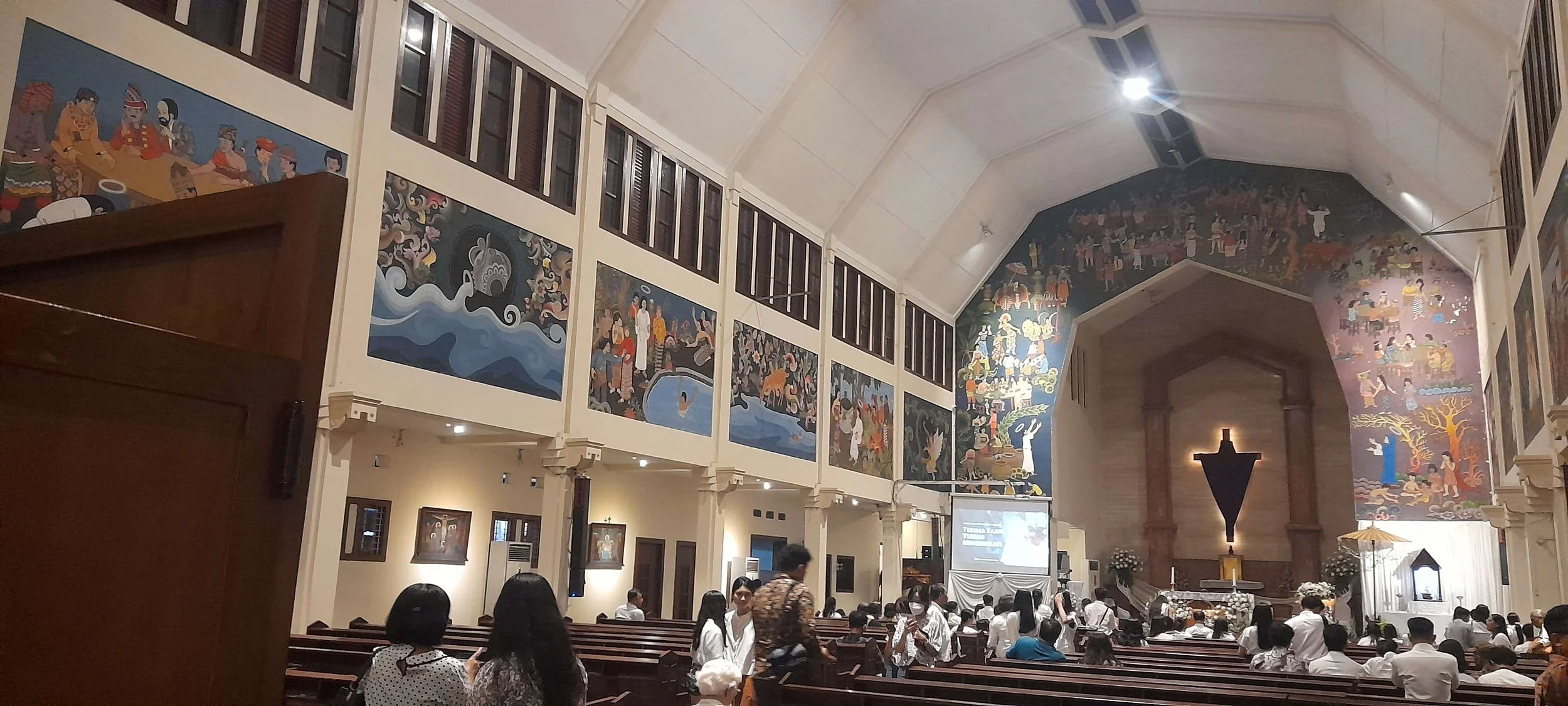
One of the most iconic Catholic landmarks in Yogyakarta, Santo Antonius Padua Church or usually referred as “Gereja Kotabaru” is known for its historic architecture, deep atmosphere and strong cultural presence in the city.
This church was built in 1926 during the Dutch colonial rule, the church experienced functional changes during the Japanese occupation, as many buildings were repurposed at the time, then people reused this building to its original purpose as a church. Designed to serve the growing European Catholic community in Kotabaru as the planned colonial neighborhood in Jogja. This church is still loved and used as the central place of worship for local Javanese Catholics, it is often packed so there are multiple mass prayers that people can follow.
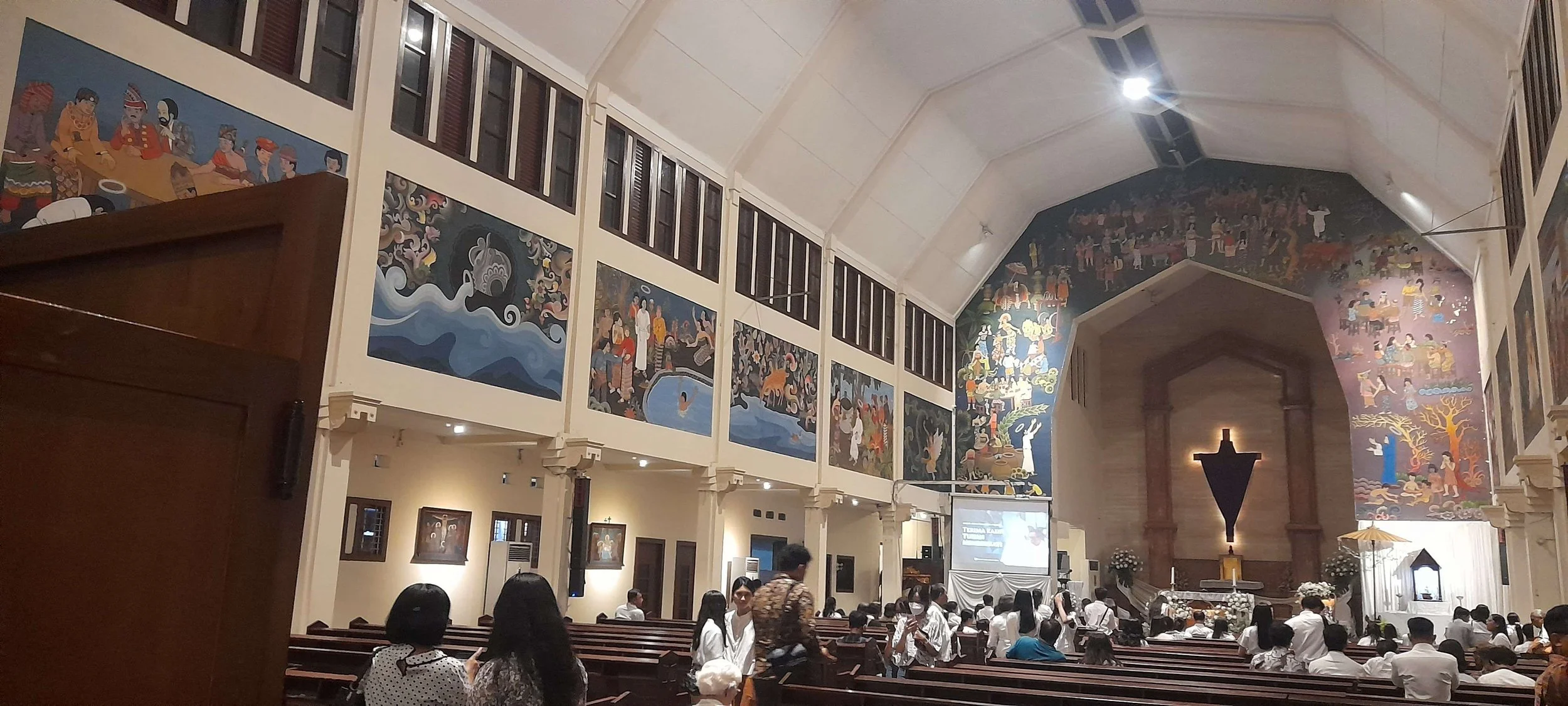
The design of this building is also very memorable because there are a lot of illustrations inside of the building of how diverse Indonesia is. The most unique element inside of this church is of a large narrative mural that blends biblical storytelling with Javanese imagery. The mural is not just one scene but it’s a panoramic story of salvation history, centered around Jesus Christ on the cross in the middle. The selection of stories for the paintings was chosen directly by Romo Ruedi Hofmann SJ, based on the Gospel of John. All of them depict the reality that ‘the Word has become flesh and God lives among us,’ meaning that God, who since ancient times spoke to our ancestors, has entered the world and works in our midst. The Gospel of John is expected to be deeply understood by the faithful; moreover, it is also frequently used during the Eucharist.
The style of its building creates a very quiet, dimly lit, and reflective atmosphere. And on the celebration of The Good Friday, they host it with large congregations, and often include stations of the cross inside the church. The Javanese atmosphere, soft spoken prayers and calm demeanor makes it feel unique.
Outside of the church, people also celebrate it by Jalan Salib (walking in cross), it is very common to find in Bantul, Kulon Progo, and Gunungkidul and it is usually held outdoors. But, what is jalan salib? It is a catholic devotion that retraces the final journey of Jesus Christ, from condemnation to crucifixion and burial. In areas like Bantul, Kulon Progo, and Gunungkidul it is held outside across real terrain, passing through villages and hills or even rice fields which turns the ritual into something physical and immersive.
The one thing that makes it more special about good friday celebration in indonesia is not just about the prayer, but the value of tolerance within the society. In the Sleman area, muslims often help with the church services like maintaining security around the area, managing the parking area, helping congregants cross the street, and some even help with playing the instruments inside the church. This isn’t a new thing, rather a habit that has been done since long ago to help everyone. And interestingly enough, the habit of helping each other (gotong royong) is reciprocal. During Eid Mubarak, Christians also help maintain security around mosques, and some also liven up Ramadan.
What is so different between the celebrations in Yogyakarta to any other city in Indonesia?. While other places in Indonesia like Larantuka celebrate it in a big public ritual where thousands of pilgrims attend as the statue of Baby Jesus is brought by sea in a poignant procession, uniting with the Virgin Mary at the Cathedral, The good friday in Yogyakarta is celebrated in more modest and centered in the church itself. That modesty is what makes the meaning of Good Friday celebration stronger, there are no big celebrations but a space for pilgrims to reflect and introspect.
Good Friday in Yogyakarta is about more than just a religious commemoration. It is a meeting point between faith and social life, between silent prayer and tangible solidarity. In this city, you can see how, faith is practiced solemnly, differences are celebrated peacefully, and tradition coexists with modernity
A small snapshot of Indonesia, warm, inclusive, and meaningful.