
Candi Sewu: The Buddhist Masterpiece Hidden Beside Prambanan
More than 1,200 years ago, ancient Javanese builders created an extraordinary Buddhist sanctuary. Today, its ruins reveal a story of religion, royal power, artistic achievement, and a civilisation connected to the wider world.
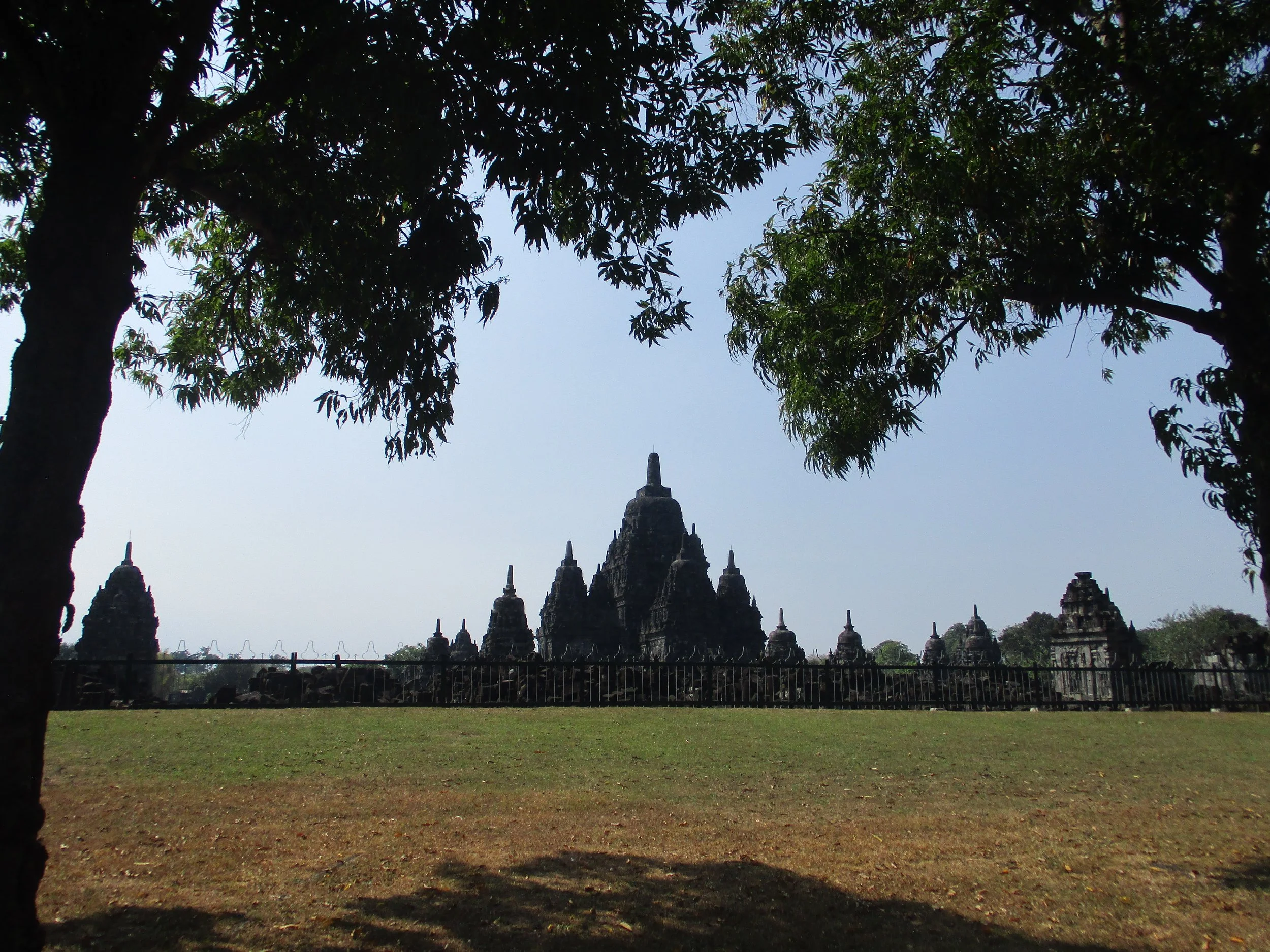
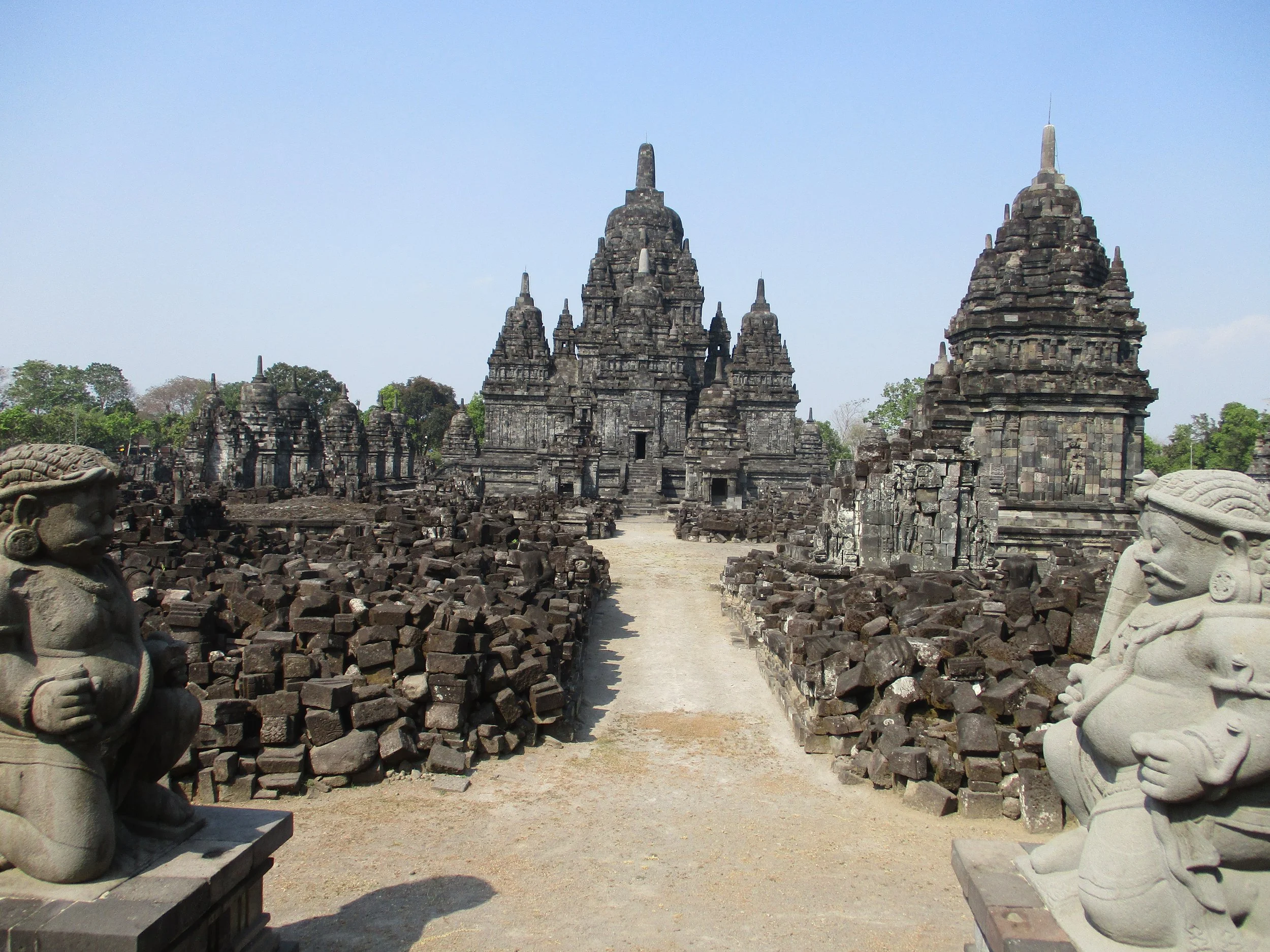
Just 800 metres north of the magnificent Prambanan Temple stands another extraordinary monument of ancient Java. There are no towering Hindu spires here. Instead, hundreds of smaller stone shrines surround a monumental central sanctuary. Giant guardian statues watch over the entrances, while intricate carvings preserve the spiritual and artistic traditions of a civilisation that flourished more than a thousand years ago.
This is Candi Sewu, one of Indonesia's most significant Buddhist temple complexes.
Although it’s rarely known, Sewu tells a fascinating story. Its architecture and inscriptions reveal a period when Buddhism enjoyed royal patronage in Central Java, religious ideas travelled across Asia, and monuments were designed to express both spiritual beliefs and political authority. But Candi Sewu is more than an impressive collection of ancient buildings. Its carefully organised layout, sculptures, and sacred spaces suggest that every element contributed to a larger religious vision.
To understand Sewu is to discover a remarkable chapter of Javanese history that is still being reconstructed today.
The word sewu means "one thousand" in Javanese.
Despite its name, the complex originally contained 249 temples, according to the standard archaeological reconstruction.
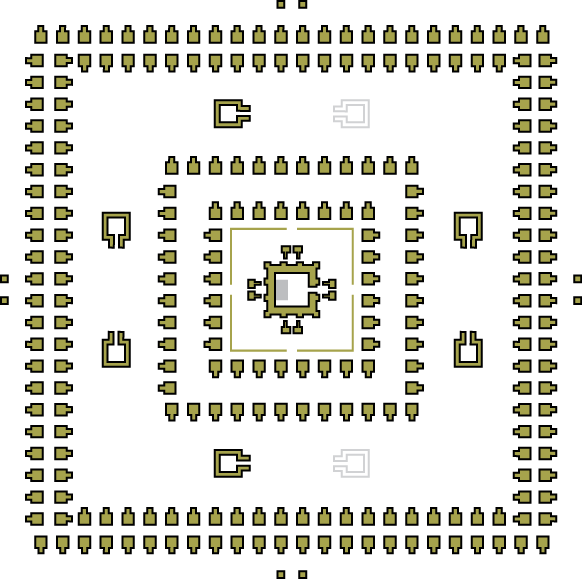
These consisted of:
1 principal temple, standing at the centre.
8 candi apit, larger intermediate temples positioned along the main axes.
240 candi perwara, smaller subsidiary shrines arranged in four concentric rows.
The smaller shrines formed rows of 28, 44, 80, and 88 temples, creating an extraordinary geometric arrangement around the main sanctuary. The name Sewu is also associated with the famous Javanese legend of Roro Jonggrang, in which a thousand temples were to be constructed in a single night.
Yet the historical origins of Sewu are far older than the versions of the legend known today.
Its story begins in the eighth century, during one of the most remarkable periods of cultural and religious development in ancient Java. During the eighth and ninth centuries, Central Java witnessed an extraordinary wave of temple construction. The region was home to the ancient Mataram kingdom, where successive rulers and religious patrons supported the development of Hindu and Buddhist monuments.
Within the plains surrounding present-day Prambanan, temples such as Sewu, Kalasan, Lumbung, and later the great Hindu sanctuary of Prambanan formed part of a remarkably diverse sacred landscape. Candi Sewu emerged during this period of intense architectural and religious activity. Its enormous scale suggests the involvement of powerful patrons and a highly organised workforce. Constructing hundreds of stone buildings required skilled craftspeople, access to building materials, logistical coordination, and sophisticated knowledge of architecture.
They reveal a society capable of mobilising considerable resources, sustaining specialised crafts, and transforming complex religious ideas into monumental architecture. The surviving evidence also points to a Java that was connected to intellectual and religious developments far beyond the island. Much of what we know about Candi Sewu's early history comes from two important inscriptions dating to the late eighth century. Discovered near Candi Lumbung, south of Sewu, the Kelurak inscription praises Manjushri, an important bodhisattva in Mahayana Buddhism. It also refers to a ruler named Sangramadhananjaya, who was associated with the powerful Sailendra dynasty.
One particularly fascinating detail is its reference to Kumaraghosha, a Buddhist teacher from Bengal, in present-day South Asia. His appearance in the inscription offers a glimpse of the movement of religious scholars, knowledge, and traditions between Java and the wider Buddhist world. Ancient Java was not culturally isolated. It participated in networks through which religious texts, artistic traditions, and intellectual ideas circulated across Asia.
A second inscription, discovered within the Candi Sewu complex, refers to a sacred building called Manjusrigrha, commonly translated as "House of Manjushri." The inscription records religious dedication and merit associated with the sacred building. Its discovery has led scholars to connect the name Manjusrigrha with Candi Sewu, although questions remain about the precise relationship between the inscription and the surviving architecture. Together, the two inscriptions provide valuable evidence of Buddhist religious activity and royal patronage in the region during the late eighth century.
They do not, however, prove that the entire complex was built or completed within a single decade. Architectural research suggests that the main temple underwent several phases of construction and modification. Candi Sewu, like many important religious monuments, developed over time. One of Sewu's most remarkable features is its architectural layout. Unlike a temple organised around a single isolated sanctuary, Sewu consists of hundreds of structures arranged symmetrically around a monumental central building. The smaller shrines form four concentric quadrangles, while the eight intermediate temples reinforce the principal north, south and east, west axes.
This highly ordered arrangement has frequently been interpreted in relation to the mandala, a geometric representation of sacred order and the Buddhist cosmos. In this understanding, the temple complex was not simply a group of buildings. Its organisation could help give physical form to religious ideas, connecting architecture with the spiritual understanding of the universe.
At the centre stands the principal sanctuary, approximately 30 metres high, with a complex polygonal plan and projecting chambers. Its intricate architecture reflects the technical abilities of ancient Javanese builders. Archaeologist Jacques Dumarçay identified several phases of construction and alteration in the central temple. Other researchers have proposed different dates for some of these developments.
Such debates remind us that ancient monuments were not necessarily static. Their form could change across generations as new patrons, architectural decisions, and religious requirements shaped their development. The precise meaning of every part of Sewu's original design remains an area of research.Inside Sewu's principal sanctuary lies one of its most intriguing surviving features. A raised altar contains an empty stone throne.
The National Museum of Asian Art at the Smithsonian describes the unusual arrangement of the throne and the narrow stairways around it, suggesting that ritual activities may once have taken place here.
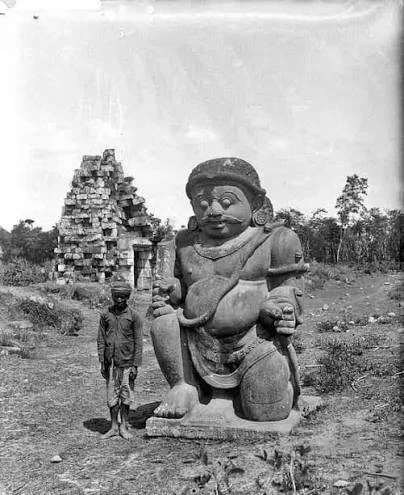
Before visitors reach the central sanctuary, they encounter some of Candi Sewu's most recognisable sculptures. Known as Dwarapala, these monumental stone guardians stand at the entrances to the complex.
Four pairs originally guarded the principal approaches. With powerful bodies, fierce expressions, ornate jewellery, and large weapons, their appearance can seem intimidating. Yet their role was protective. In Hindu-Buddhist architectural traditions, guardian figures frequently marked the entrances to important sacred places. At Sewu, the Dwarapala helped establish a symbolic boundary between the surrounding world and the religious environment within. Their placement formed part of the experience of entering a sacred complex, demonstrating how architecture and religious imagery worked together.
Even after more than twelve centuries, these guardians remain among the most powerful visual reminders of Sewu's original monumental character.
The religious significance of Candi Sewu is closely associated with Manjushri In Mahayana Buddhism, Manjushri is a bodhisattva associated with wisdom and insight. A bodhisattva is a being dedicated to the path of awakening, traditionally understood as seeking enlightenment for the benefit of others. Manjushri represents the wisdom needed to overcome ignorance and understand the nature of reality.
The name Manjusrigrha suggests a sacred dedication associated with these religious ideals. The inscription also expresses aspirations connected to devotion, merit, and the welfare of other beings. For Buddhist patrons, supporting the construction of a sacred monument could be both an act of religious devotion and a means of generating spiritual merit. This gives Sewu a deeper significance. The complex was not built simply to display wealth or architectural skill. It was also created within a religious world where constructing and supporting sacred spaces could express beliefs extending beyond an individual's lifetime.
One of the most fascinating aspects of Candi Sewu is its location. Less than a kilometre away stands Prambanan, the great Hindu temple complex dedicated principally to Shiva. Sewu belongs to a Buddhist tradition, while Prambanan represents a major achievement of Hindu architecture. Their proximity reflects the presence of both traditions within the same cultural and political landscape of ancient Central Java.
This relationship is particularly important because it challenges overly simple descriptions of the region's past.
Ancient Javanese religious history was not shaped by a single tradition. Buddhist and Hindu institutions, artistic practices, and royal patronage all contributed to the development of its monumental landscape. The temples alone cannot tell us that relationships between communities were always peaceful or uncomplicated. But they provide remarkable evidence of different religious traditions flourishing within the same region.
Today, Sewu and Prambanan form part of the Prambanan Temple Compounds UNESCO World Heritage Site, recognised for its exceptional architectural and cultural significance. More than 1,200 years after its construction, Candi Sewu survives in an incomplete state. Many subsidiary shrines have collapsed or remain as scattered stone foundations. Sculptures have been damaged, displaced, or lost. Some Buddha figures no longer retain their heads, reflecting a long history of deterioration, deliberate damage, theft, and other destructive forces. Archaeological documentation and restoration have helped recover important parts of the complex.
Yet restoration is not simply about making an ancient building look complete again. It requires understanding original construction methods, identifying displaced architectural elements, and making careful decisions about what can be reconstructed from surviving evidence. For this reason, the ruins themselves remain valuable. They contain information about the people who built Sewu, the changes made to its architecture, and the many centuries through which the complex has survived.
Every restored wall and every surviving fragment contributes to our understanding of the site. Candi Sewu is often introduced as the Buddhist temple beside Prambanan. But its significance extends far beyond its location. Its inscriptions reveal connections between Java and the wider Buddhist world. Its architecture reflects extraordinary technical skill and religious imagination. Its sculptures preserve artistic traditions, while its surviving ruins continue to raise questions that researchers are working to answer.
Perhaps the most remarkable thing about Candi Sewu is that its story remains unfinished. Not everything about the sanctuary's original appearance, religious functions, or architectural development is fully understood. And that is precisely why it matters. Candi Sewu reminds us that cultural heritage is not merely something inherited from the past. It is something we continue to discover, interpret, and preserve.